Upgrade Your Game, Slash Your Spend

China has really stepped up as a major hub for both making and innovating gaming mice. Whether it’s esports pros, office workers, streamers, or big retail brands around the world, a lot of these companies are based there. In this guide, we’re looking at ten key players in China’s gaming peripheral scene—things like Rapoo, Dareu, Fuhlen, Redragon, Ajazz, Delux, Darmoshark, VGN, Attack Shark, and GameSir.
We didn’t just pick these brands based on their online popularity, though. We took a deeper dive into their sensor performance, click reliability, wireless stability, ergonomic design, how their software works, warranty policies, and how transparent they are about manufacturing. A good Gaming Mouse should move smoothly across different sensitivities, and the buttons need to hold up after lots of daily use. Little things, like a flexible cord, balanced weight, or a receiver that works well even on a cluttered desk, really matter too.
Some brands focus on budget-friendly, mass-market options, while others go for more enthusiast-level stuff—lightweight shells, higher polling rates, modular parts—you name it. They all have different strengths, which makes ranking them a bit tricky. Plus, your choice might depend on your grip style or hand size—what feels comfortable for one person might not for another.
This article also looks at how these brands fit into bigger setups. For example, some offer bundles with gaming Keyboards, mouse pads, and headsets—that can give your whole desk a nice, coordinated look. But, honestly, those bundles might not always be the best option if you’re after a specific device that suits you perfectly.
Keep in mind, this list isn’t set in stone. New models come out, firmware gets updated, factories may change things up, and customer service varies. So, always double-check the latest specs before making a purchase. And it's worth testing devices yourself when possible, because what’s advertised doesn’t always match real-world performance over the long haul.
“Top” should mean measurable performance, not online visibility. For China’s ten leading gaming mouse manufacturers, I would score 2024 domestic revenue, unit shipments, market share, and exports. Revenue shows commercial strength. Shipments reveal factory scale. Market share indicates competitive position. Export value tests international acceptance.
IDC’s 2024 gaming peripherals research identifies continued demand for performance accessories, especially wireless models and lower-latency devices. Public customs data also shows China remains a major export base for computer input equipment. However, HS classifications usually combine gaming and non-gaming mice. That weakens direct comparisons. Data is imperfect.
A stronger ranking would combine audited company filings, distributor checks, and customs records. Euromonitor and Statista provide useful market estimates, but their category definitions may differ. I would therefore assign 35% to revenue, 25% to shipments, 20% to market share, and 20% to exports. Manufacturers selling a Gaming Keyboard And Mouse With Mouse Pad may gain bundle revenue, yet bundle sales can distort mouse-only comparisons. Factory capacity matters, but it does not always prove product quality. Warranty rates, sensor consistency, battery performance, and retailer feedback deserve verification. A transparent top-ten table should disclose its sources, reporting period, currency, and estimated figures. Otherwise, the ranking may look precise while hiding weak evidence.
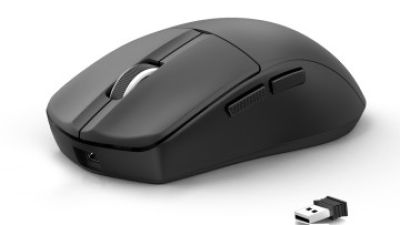
# The Complete Guide to the 26000 DPI SG8925 Triple-Mode Wireless Gaming Mouse
The 26000 DPI SG8925 is designed for players who want high-end control without a heavy shell. Weighing only 59g, it supports fast, low-fatigue movement during long gaming sessions. Its PAW3395 optical sensor offers adjustable sensitivity from 800 to 26,000 DPI, allowing users to switch from precise aiming to rapid cursor movement. A 1,000Hz polling rate also helps deliver responsive tracking, making the mouse suitable for competitive games and everyday desktop use.
Connectivity is one of its most practical features. Users can choose wired mode for continuous power, 2.4G wireless mode for low-latency play, or Bluetooth for flexible multi-device use. The built-in lithium battery supports cable-free operation, while programmable buttons and on-board memory allow preferred commands and profiles to remain available across compatible systems. This flexibility reflects wider gaming trends: Newzoo’s 2024 Global Games Market Report estimates that more than 3 billion people worldwide play games, creating demand for peripherals that can serve different platforms and play styles.
For setup, lower DPI settings are generally useful for controlled aiming, while higher settings benefit large displays and rapid navigation. The lightweight frame, three connection options, customizable controls, and high-resolution sensor make the SG8925 a versatile choice for users who want one mouse for competitive gaming, productivity, and portable setups.
Rank them by revenue, shipments, market share, and export value. Revenue shows commercial strength. Shipments reveal factory scale. Export records indicate international acceptance, but classifications can be imperfect.
Revenue could receive 35% of the score. Shipments may receive 25%. Market share and exports could each receive 20%. This method is useful, but not definitive.
Customs categories often combine gaming and ordinary computer mice. The numbers may not isolate gaming products accurately. That weakens direct comparisons.
No. Large capacity supports high-volume orders, but it does not prove product quality. Check sensor consistency, warranty handling, battery performance, and retailer feedback. Scale is only one clue.
Sensor accuracy matters more than a huge DPI figure. A good sensor tracks slowly without sudden jumps. Most players use much less than 12,000 DPI.
Not always. A 1,000Hz rate suits many users. Rates above 4,000Hz may reduce delay, but they can increase processor use and battery drain. The practical benefit varies.
Use the preferred sensitivity on a consistent mousepad. Test slow tracking, rapid flicks, and controlled stops. Watch for skips or unexpected movement. Small tests help.
Check switch durability, scroll-wheel encoding, firmware support, and warranty terms. Ask for measured click-life data. A heavier click is not automatically stronger.
Yes. Bundle revenue may make mouse sales appear larger than they are. Compare mouse-only figures when possible. Otherwise, the ranking may look more precise than the evidence supports.
This article presents a practical framework for identifying the top 10 Gaming Mouse manufacturers in China by combining 2024 revenue, shipment volume, market share, and export performance. It explains how IDC and Statista statistics can help outline the industry’s scale, growth direction, production structure, and international distribution. Rather than relying on brand popularity alone, the ranking focuses on measurable sales scale, manufacturing capacity, overseas reach, and long-term market influence.
The comparison also examines technical and business capabilities, including sensor accuracy, DPI range, polling rate, switch durability, wireless performance, patents, and supporting software. In addition, it evaluates OEM production strength, e-commerce coverage, pricing flexibility, and brand recognition. By considering both product quality and commercial performance, the article offers readers a balanced method for understanding China’s leading Gaming Mouse manufacturers and the factors that shape their competitiveness in global markets.



 Gaming Keyboard
 Gaming Mouse
 Gaming Keyboard And Mouse Combo
 Office Keyboard
 Office Mouse
 Office Keyboard And Mouse Combo