
 Gaming Keyboard
 Gaming Mouse
 Gaming Keyboard And Mouse Combo
 Office Keyboard
 Office Mouse
 Office Keyboard And Mouse Combo


Company News


0102030405
From sampling to shipment: How we manage mass production consistency for keyboards and mice
2026-09-15
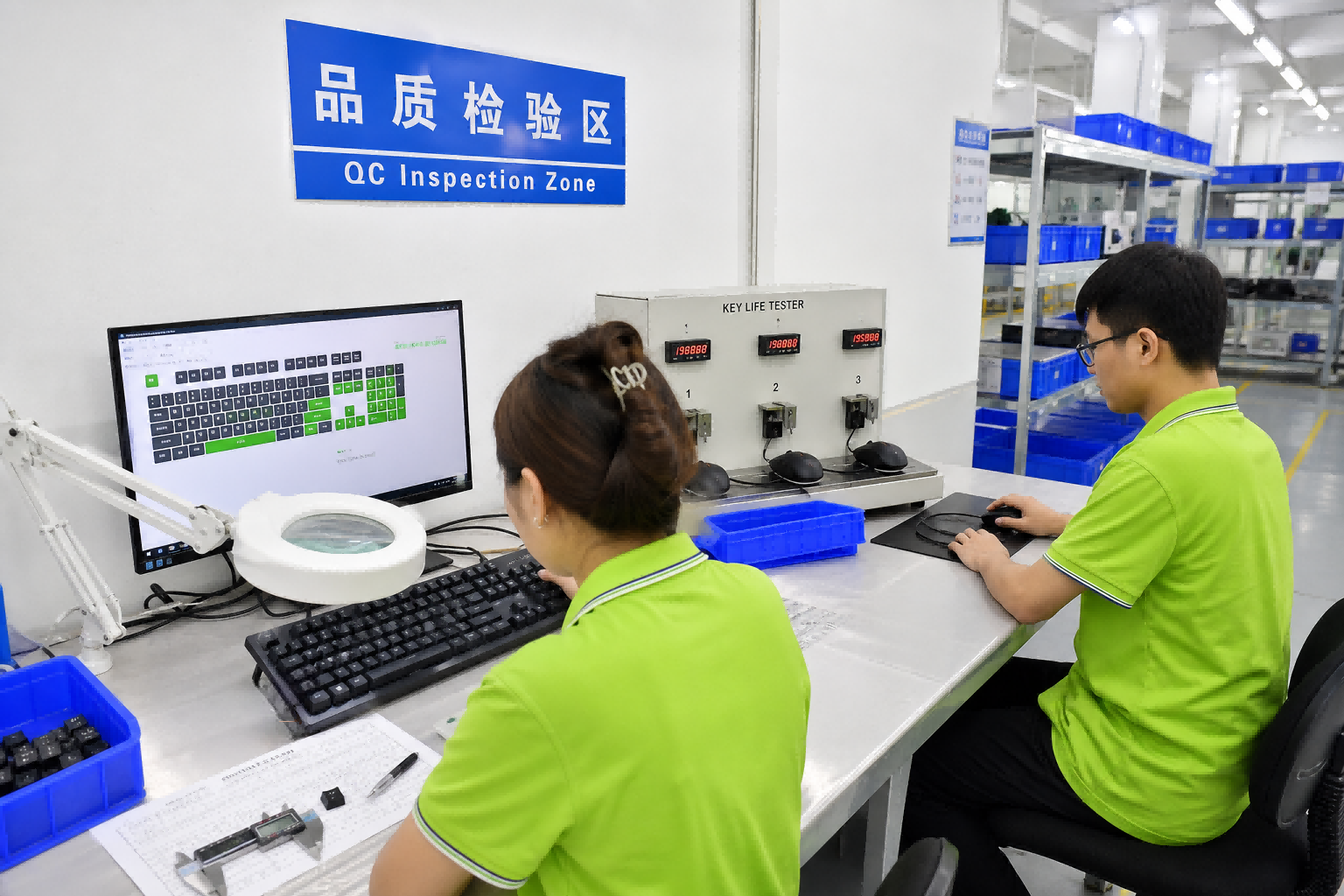
📋I. We categorize batch drift into four variables based on project records.
We categorize deviations between mass-produced goods and confirmed samples into four variables based on project records: materials (supplier and batch changes for particles, keycaps, switches, wires, or batteries), molds and equipment (mold changes, wear, and parameter variations), firmware (version upgrades or parameter adjustments), and packaging and appearance (color swatches, silkscreen printing, and packaging artwork versions). Any change can lead to discrepancies, so we document these variables in writing, maintaining verifiable version records.
❄️II. Sample Sealing and Version Freezing
At the project initiation phase, we jointly sign off on the sealed samples with the buyer, simultaneously freezing the BOM, color swatches and limit samples, critical dimensions, firmware versions, and packaging artwork, and confirming the classification of serious, major, and minor defects; limit samples are used to define acceptable color differences and appearance ranges.
🔍III. First Article Confirmation, Inspection During Production, and Outgoing Sampling Inspection
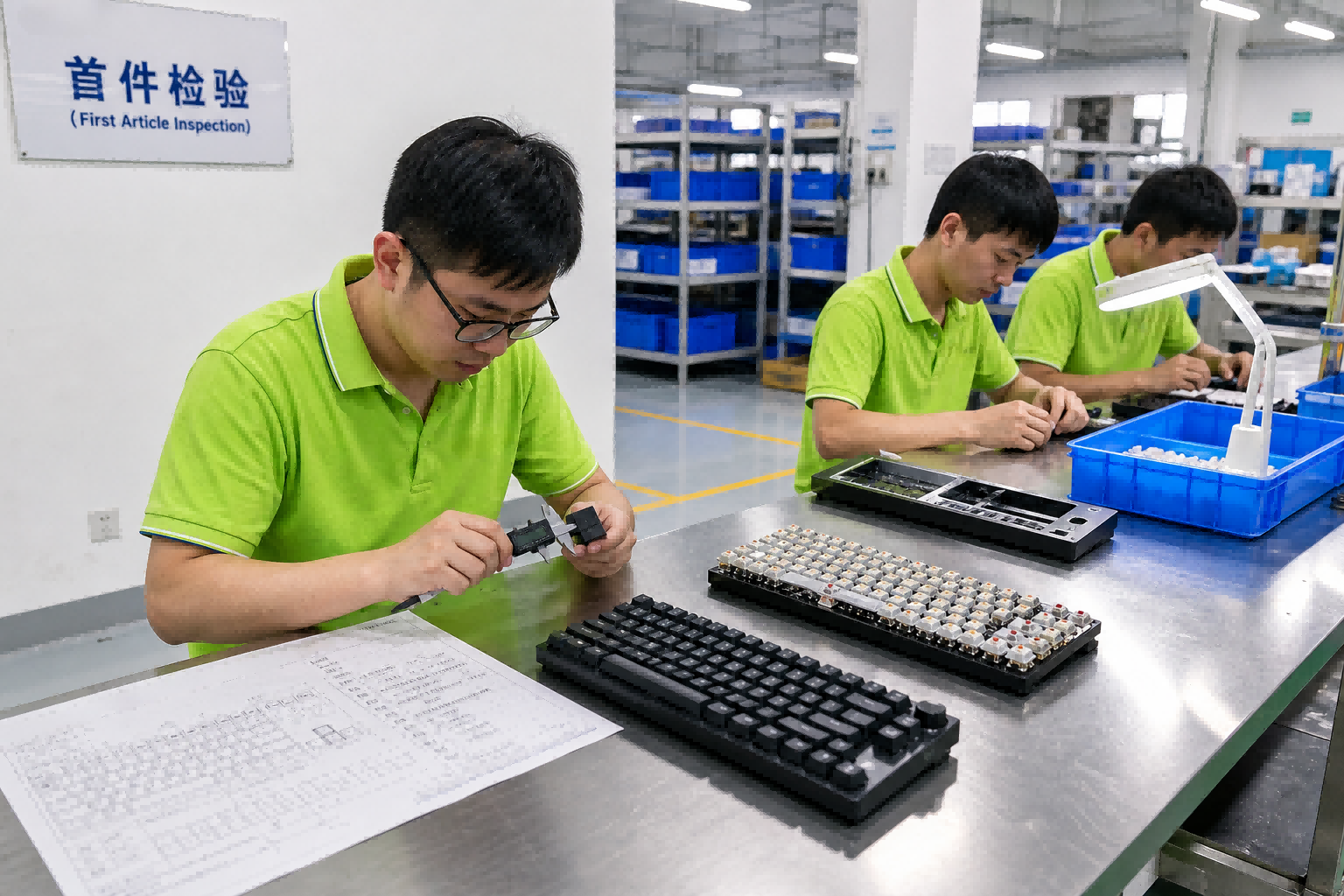
We implement first article confirmation, arrange inspections during production, and conduct sampling inspections at the agreed AQL level before shipment; for orders with special packaging or transportation requirements, additional container loading inspections can be negotiated. Note: AQL is a sampling acceptance/rejection rule based on batch size, inspection level, and defect classification. It is a risk management tool and does not represent zero defects in the entire batch (QIMA AQL). Third-party inspections typically follow ANSI/ASQ Z1.4 (ISO 2859-1) sampling, covering all stages from initial production to container loading (QIMA Inspection Services).
⚖️IV. Change Approval and Reconfirmation Thresholds
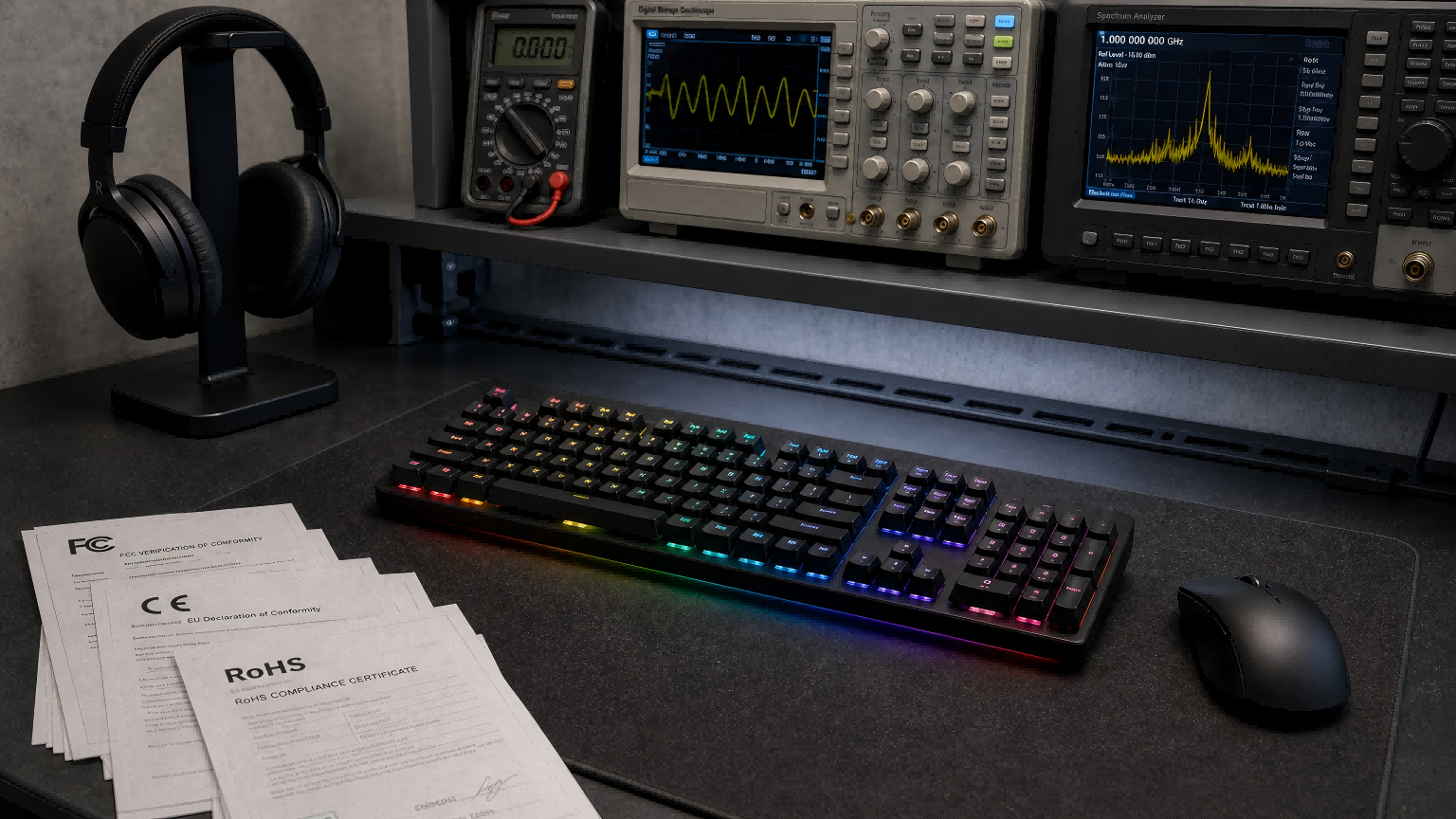
When materials, processes, firmware, or packaging need to be changed, we require a written change order and an assessment of whether retesting or re-sampling is necessary. A reconfirmation threshold is set after material changes or firmware upgrades; mass production release will not proceed without confirmation. If the mass production version differs significantly from the test version in design, firmware, or labeling, interface or wireless qualification may need to be reassessed: USB-IF requires products to pass testing and be included in the Integrators List before they can be used with the license mark; differences between mass production products and test samples may trigger retesting (USB-IF); Bluetooth products should complete the qualification process before sale or distribution; alliance qualification does not replace legal compliance in the target market (Bluetooth SIG).
🔗V. Batch Traceability and Corrective Actions
We use batch numbers/serial numbers to link material, inspection, shipment, customer complaint, and corrective action records, driving recurring issues into the CAPA closed-loop verification process.
🏭VI. Manufacturing Scale and Evidence Boundaries
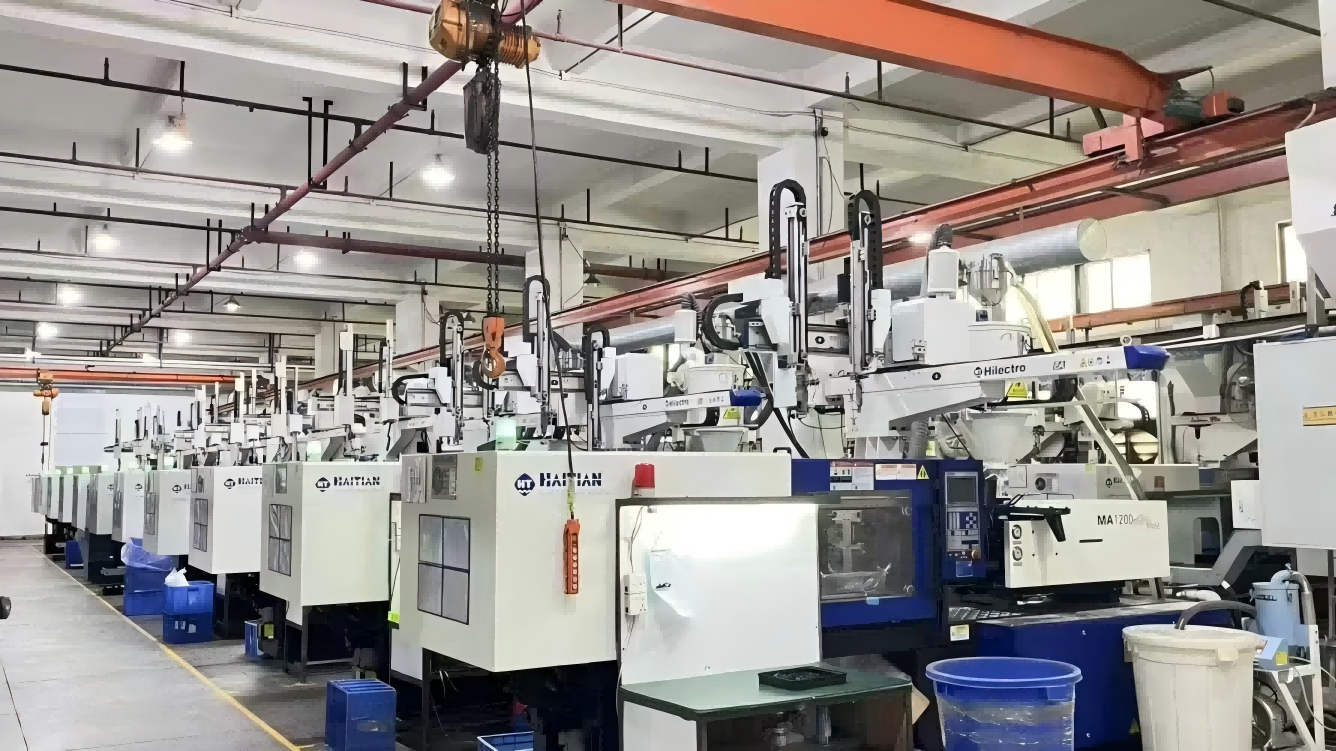
According to the company, it has over 20 years of experience in Keyboard and mouse manufacturing, a 12,000 square meter factory, 500+ employees, 10 fully automated production lines, and 15+ intelligent injection molding machines, with a monthly output of over 950,000 sets. This figure represents overall production capacity and does not represent current available capacity, single-model capacity, or delivery time guarantees. The above mechanism is a process we have established and implement, and is not equivalent to performance conclusions verified by a third party; specific performance needs to be confirmed after agreeing on testing conditions based on model, sample size, testing equipment and systems, rejection criteria, and firmware version.
📄VII. Documents Available to Buyers
Production equipment ledger (provided by the company, not verified by an independent third party), anonymized sample sheets, versioned BOM sample, and inspection and shipment record samples.