
 Gaming Keyboard
 Gaming Mouse
 Gaming Keyboard And Mouse Combo
 Office Keyboard
 Office Mouse
 Office Keyboard And Mouse Combo



Six major concerns before placing a large order for keyboards and mice: One manufacturer changed "Can I trust them?" to "Can I verify their credentials?"
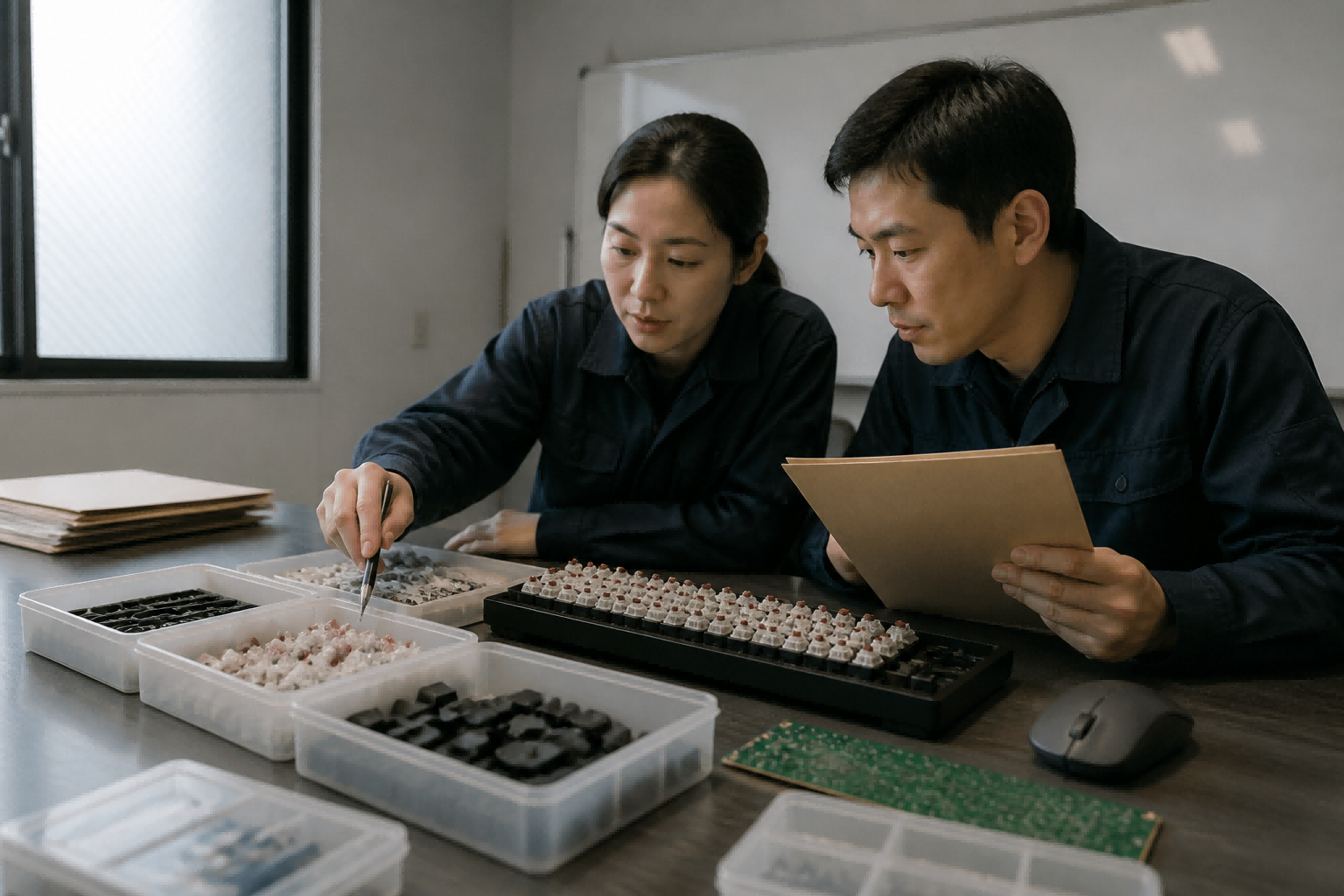
I. Pricing Structure: Concerns about "hidden markups behind low prices"
Buyer's concerns: The quotation only provides a unit price, with mold fees, certification fees, and sampling fees deferred; the quotation validity period and price adjustment terms are vague; if the switch or keycap manufacturing process is changed, the price will be renegotiated.
Industry-level risks: Industry research estimates show that core materials such as switches account for about 40% of the total cost of the machine, and fluctuations in raw material prices will directly affect the unit price; the gross profit margin in OEM manufacturing is generally low (industry estimates are less than 12%), and excessive price reductions are often imperceptibly passed on to materials and processes.
Our approach: The quotation lists each item separately—unit cost and tiered pricing, mold fees (specifying which tooling set corresponds to and which round of samples is included), certification and testing fees, sampling fees, and packaging and instruction manual costs; the quotation validity period and price adjustment trigger conditions are directly stated in the quotation, not included in the contract under "negotiable".
You can verify this by: requesting a breakdown of the quotation template; verifying the correspondence between mold fees and tooling numbers; and fixing the validity period and price adjustment clauses as an appendix to the contract.
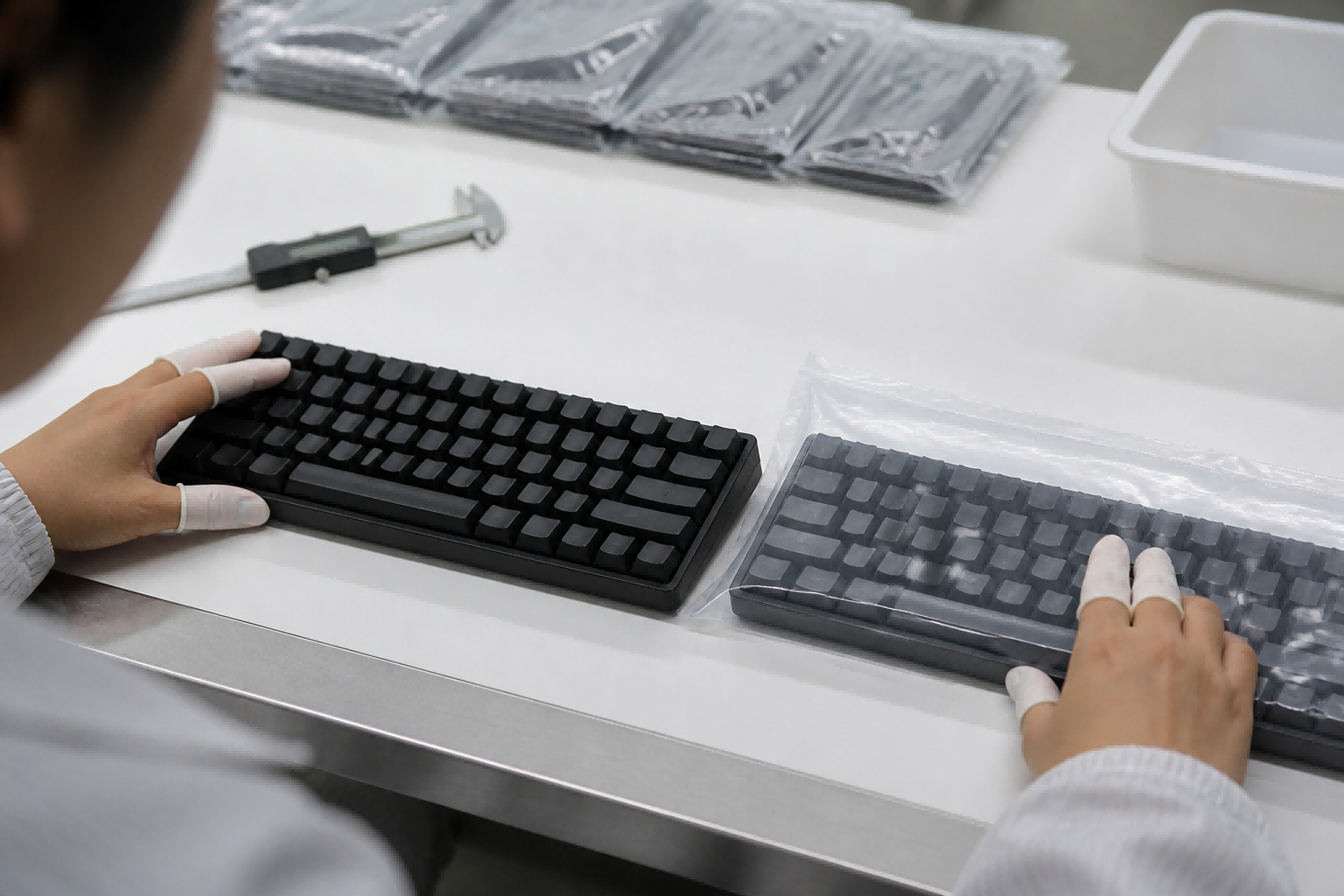
II. Quality and Batch Consistency: Concerns about "Samples are great, but bulk orders are different"
Buyer's concerns: Samples pass in terms of feel, color scheme, and connection stability, but mass-produced batches exhibit issues such as switch actuation force deviations, keycap character wear, wireless connection drops, or keystroke overlap.
Industry-level risks: Third-party inspection agencies, in their publicly available supplier risk assessments, list "cutting corners," "swapping qualified samples," and "mixing in defective products" as some of the most common practices (the sampling criteria in these assessments are not publicly disclosed; this is only a risk warning). For buyers, the most expensive aspect is never the unit price, but rather the rework and replacement costs after delivery.
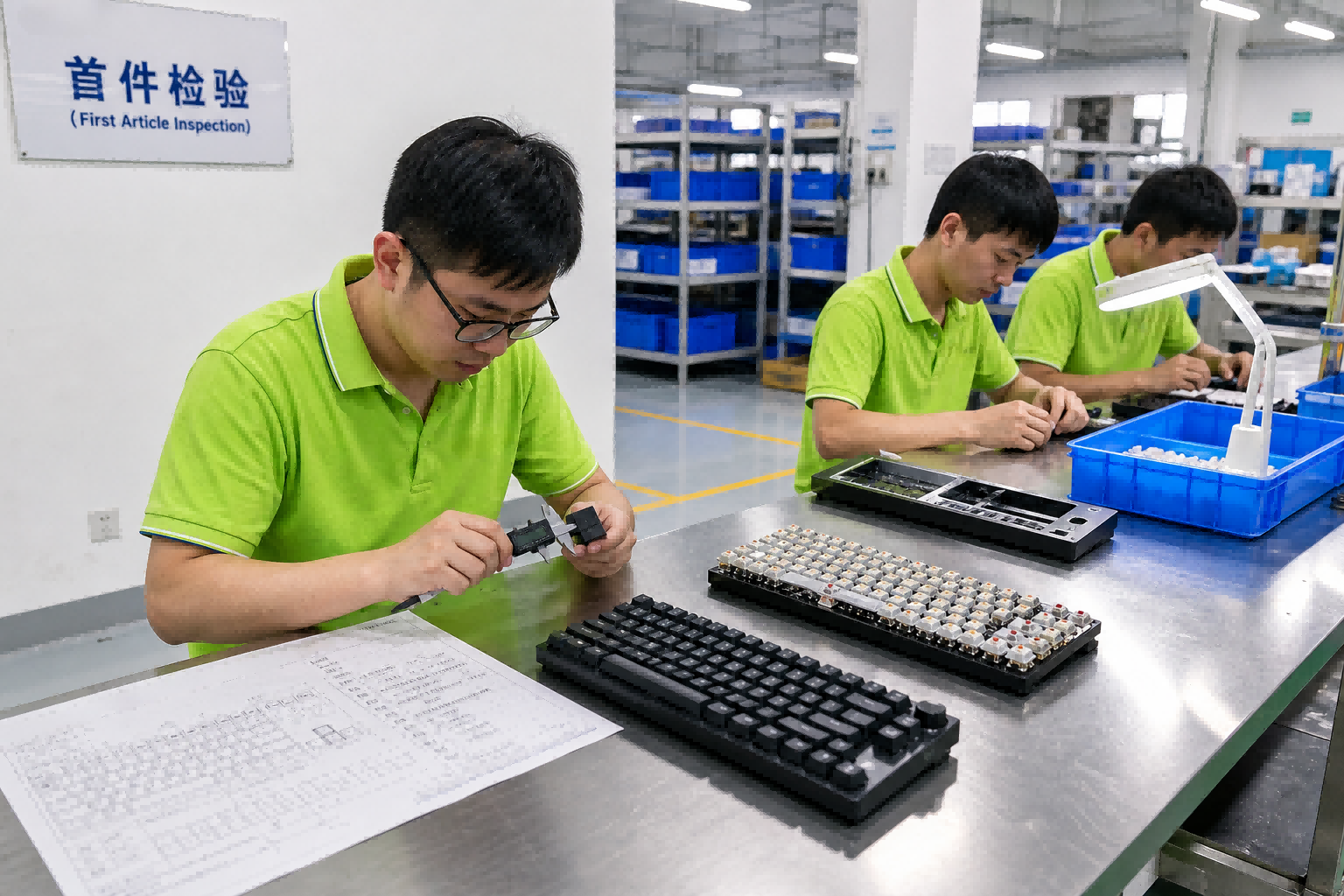
Our approach: We implement a sealed sample system—each party retains a signed sample as the basis for bulk order acceptance; key processes are completed on our own production lines, with 10 fully automated production lines and over 15 intelligent injection molding machines covering production and structural component molding, reducing batch fluctuations caused by outsourcing; before shipment, we conduct functional spot checks on each batch (key lifespan, keystroke overlap, wireless connection stability), and the inspection records are provided with the goods.
You can verify this by: inspecting the production line operation, injection molding workshop, and sample retention cabinet on-site; requesting the sampling inspection records of the previous batch of goods and comparing them with the sealed samples.
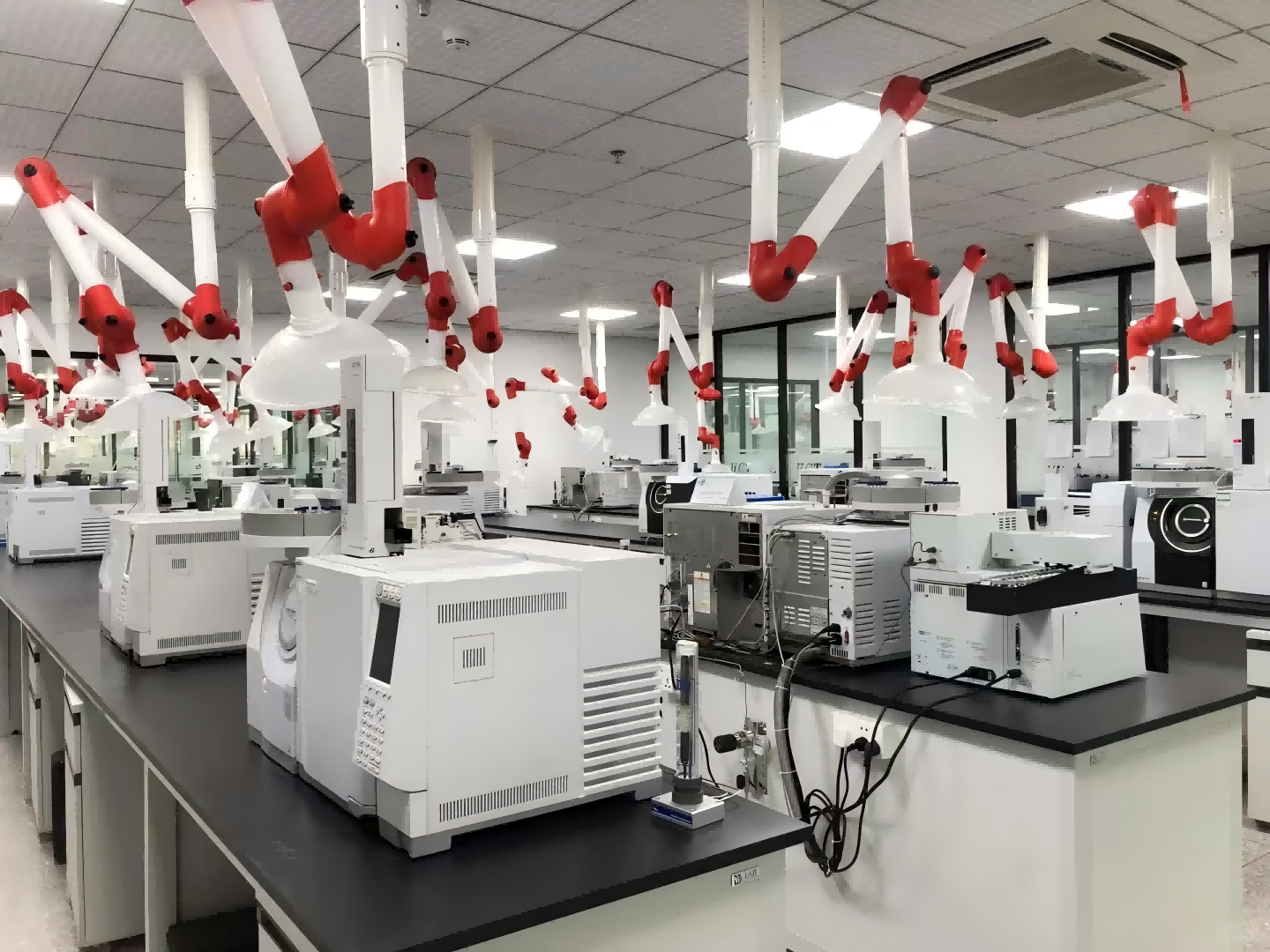
III. Compliance and Certification: Concerns about "Detention at Port, Blocked Listing on Platforms"
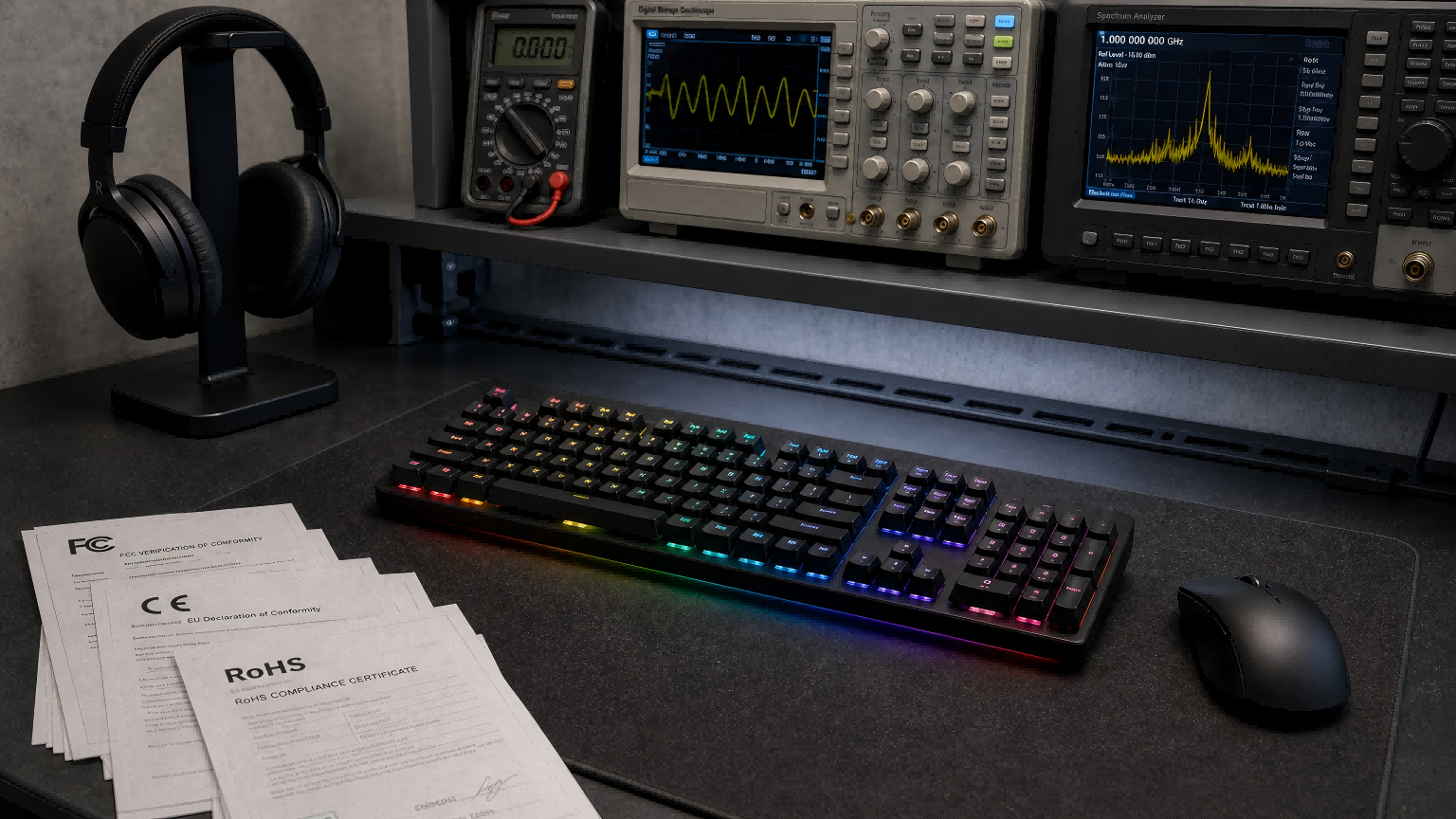
Buyer Concerns: Wireless Keyboards and mice in the EU market involve CE-RED, as well as RoHS and REACH directives; Germany also involves EPR registration under the Packaging Act; the US requires FCC-ID and attention must be paid to California Prop 65 warning labels; Japan's TELEC certification is charged per model, with industry reports indicating a cost of approximately $3,000 per model. Missing any link in this chain can cause delays in customs clearance or listing.
Industry-Level Risks: Mismatches between certification documents and actual product models, expired reports, or reports using older models are the most common pitfalls for buyers; once discovered by customs or platform inspections, the losses far exceed the cost of the certification itself.
Our Approach: Pre-Certification – Confirming the target country's certification scheme, testing items, and cost allocation during the sampling stage; providing corresponding test reports and document lists for specific models; assisting buyers in completing the target country's EPR registration and label warning requirements, ensuring that "documents – model – physical product" correspond. Our quality system is ISO 9001:2008 certified, providing systematic support for the stability of customized projects.
You can verify this by: requesting a "Model-Certificate" lookup table; verifying whether the certificate number can be retrieved in the issuing body's public query system; and requesting written confirmation of the certification items included in the quotation.
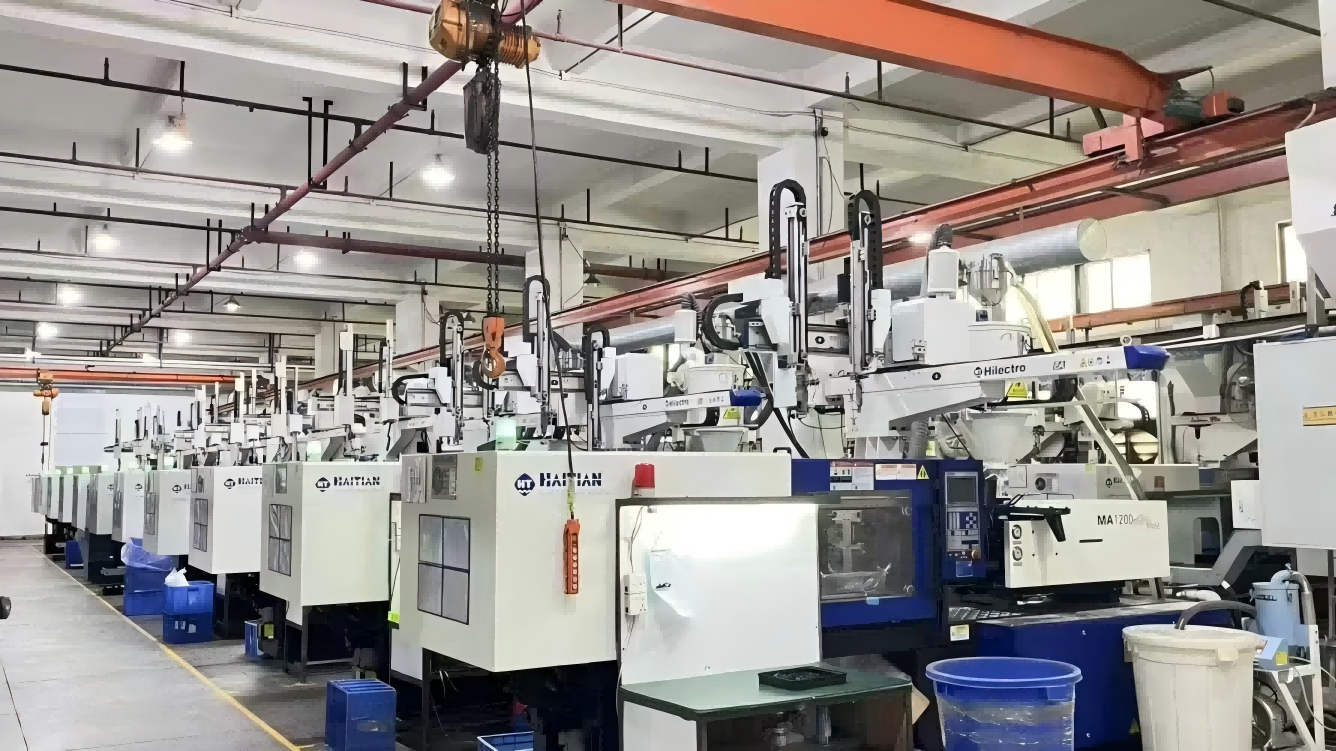
IV. Delivery Time, Capacity, and Flexibility: Concerns about "Accepting Orders but Failing to Deliver"
Buyer Concerns: Are the supplier's claimed capacity and in-house production lines accurate? Will large orders be pushed back to smaller orders during peak season? How can batch delivery schedules be matched with shipping cycles?
Industry-Level Risks: Outsourcing often involves falsely claiming in-house capacity, and temporary price increases or delays during peak seasons are recurring issues in the industry. Large orders are broken down into multiple production stages, leading to a loss of batch consistency.
Our Approach: We demonstrate our capacity composition through equipment lists, production line layouts, and in-production orders—a 12,000 square meter factory, over 500 employees, 10 fully automated production lines, and more than 15 intelligent injection molding machines, with a monthly capacity exceeding 950,000 sets; key processes are in-house; production line schedules and safety stock of critical materials are secured in advance for large orders; batch delivery schedules are linked to inspection milestones, and delivery commitments are written into contracts with penalty clauses.
Here's how you can verify this: During a factory visit, directly observe the equipment operation and in-production orders, rather than just looking at brochures; verify the factory area, production lines, and the number of injection molding machines; request a production schedule and check your order availability.

V. Payment and Fund Security: Concerns about "Paying but receiving the wrong goods or not receiving the goods"
Buyer's concerns: Under the pre-T/T model, the deposit is usually between 20% and 50%; the "30% prepayment + 70% upon receipt of bill of lading" model carries risks related to the final payment and delivery; large orders lack a third-party buffer.
Industry-level risks: The maximum compensation for breach of contract in platform rules is usually far lower than the actual losses of large orders—for example, a mainstream B2B platform's compensation rule for "sold but not delivered" is 10% of the order amount, capped at $50 per order, which has limited coverage for large orders (see the end of the article for the source of the rule). The real risk is not in the compensation ratio, but in the period when the goods and money are mismatched.
Our approach: The contracting party and the receiving account must be identical; verifiable documents such as the business license and export qualifications must be provided with the contract; we support phased payments and accept third-party inspections before shipment, making the third-party inspection report one of the conditions for final payment; we do not accept payments without supporting documentation, nor do we require customers to accept payments without supporting documentation.
How you can verify: Verify that the contracting party and the receiving account name are consistent; request a corporate bank account and qualification documents; specify the relationship between third-party inspection and final payment in the contract.
VI. Intellectual Property, Exclusivity, and After-Sales Service: Concerns about "Design Leakage, Copying, and Lack of After-Sales Support"
Buyer Concerns: Copying of patterns and color schemes; patent disputes involving structure and switches; unclear design ownership and future factory replacement rights in ODM projects; ambiguous after-sales warranty coverage and return shipping costs.
Industry-Level Risks: Intellectual property disputes arising from keycap color schemes and graphic elements, as well as the risk of Section 337 investigations involving appearance and technology, have been clearly highlighted in industry reports; there are already effective precedents for patent litigation related to switches in China. Regarding mold ownership, the industry practice is "if the contract does not specify ownership, disputes are often unfavorable to the buyer"—some analyses point out that if the contract does not stipulate ownership, factories often implicitly assume "I own the mold I made."
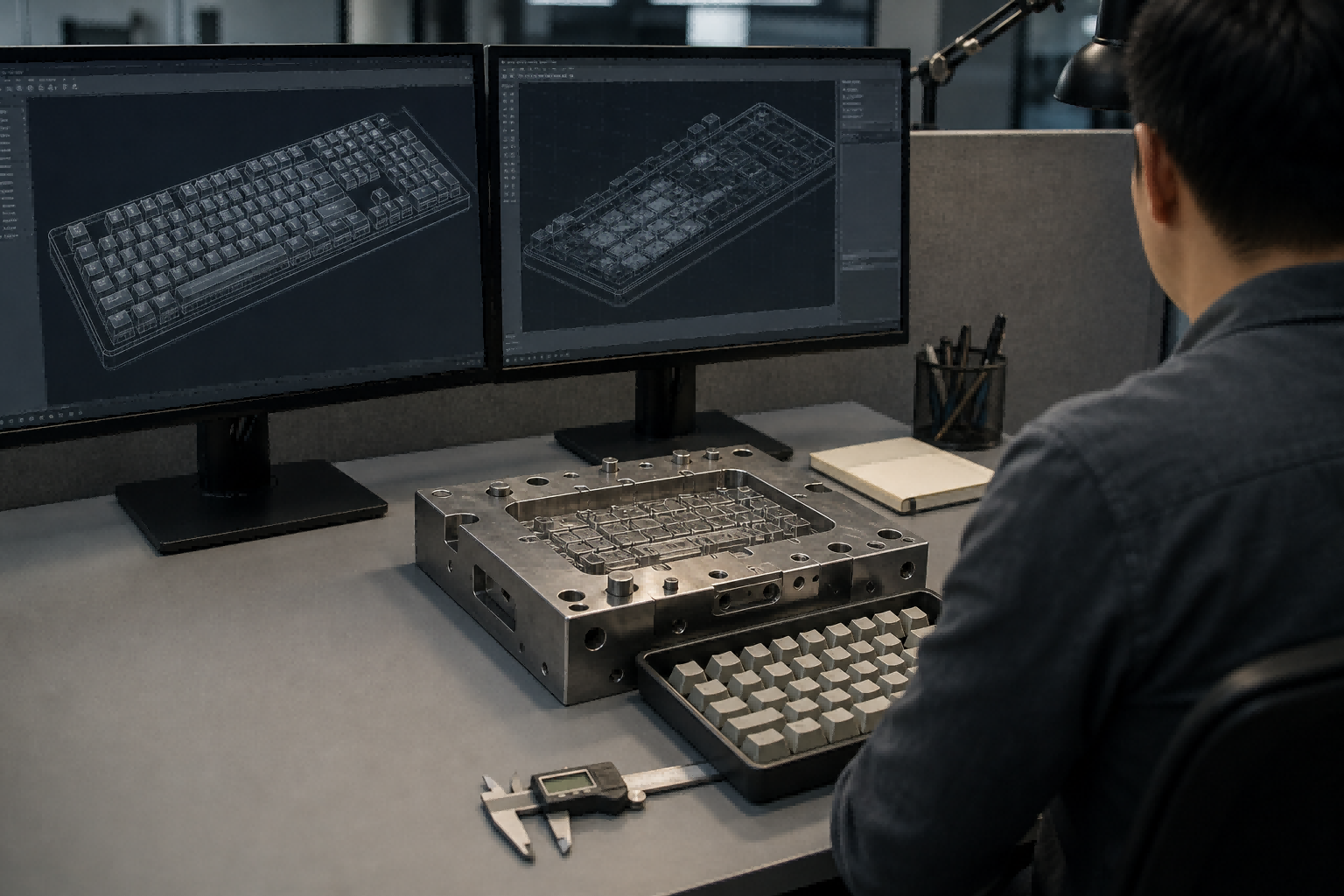
Our approach: The ownership of drawings, tooling, and molds is written into the contract, specifying the tooling number and ownership corresponding to the mold opening fee, and the conditions for refunds after reaching a cumulative order volume target can be agreed upon; for ODM and private mold projects, confidentiality and exclusivity clauses are signed, clearly defining the authorized area and duration; warranty period, after-sales responsibility, and return shipping costs are itemized in the contract; order samples are retained for verification.
How you can verify: Request a contract terms template preview; verify the mold and tooling number ledger and ownership clauses; confirm whether the scope and duration of the exclusive authorization match your market plan.
Trust is not an adjective; it's a verifiable capability.
Shenzhen Deying is a manufacturer specializing in computer peripherals with over 20 years of industry experience. Located in Shenzhen, the factory covers 12,000 square meters, employs over 500 people, and is equipped with 10 fully automated production lines and more than 15 intelligent injection molding machines, with a monthly production capacity exceeding 950,000 sets. Products cover wireless keyboards, mechanical keyboards, gaming keyboards, office keyboards, ergonomic keyboards, mice, gaming mice, keyboard and Mouse combos, headphones, and other computer accessories, serving the European, North American, South American, Southeast Asian, and Middle Eastern markets, suitable for office, gaming, home, and educational settings. The quality system is ISO 9001:2008 certified.
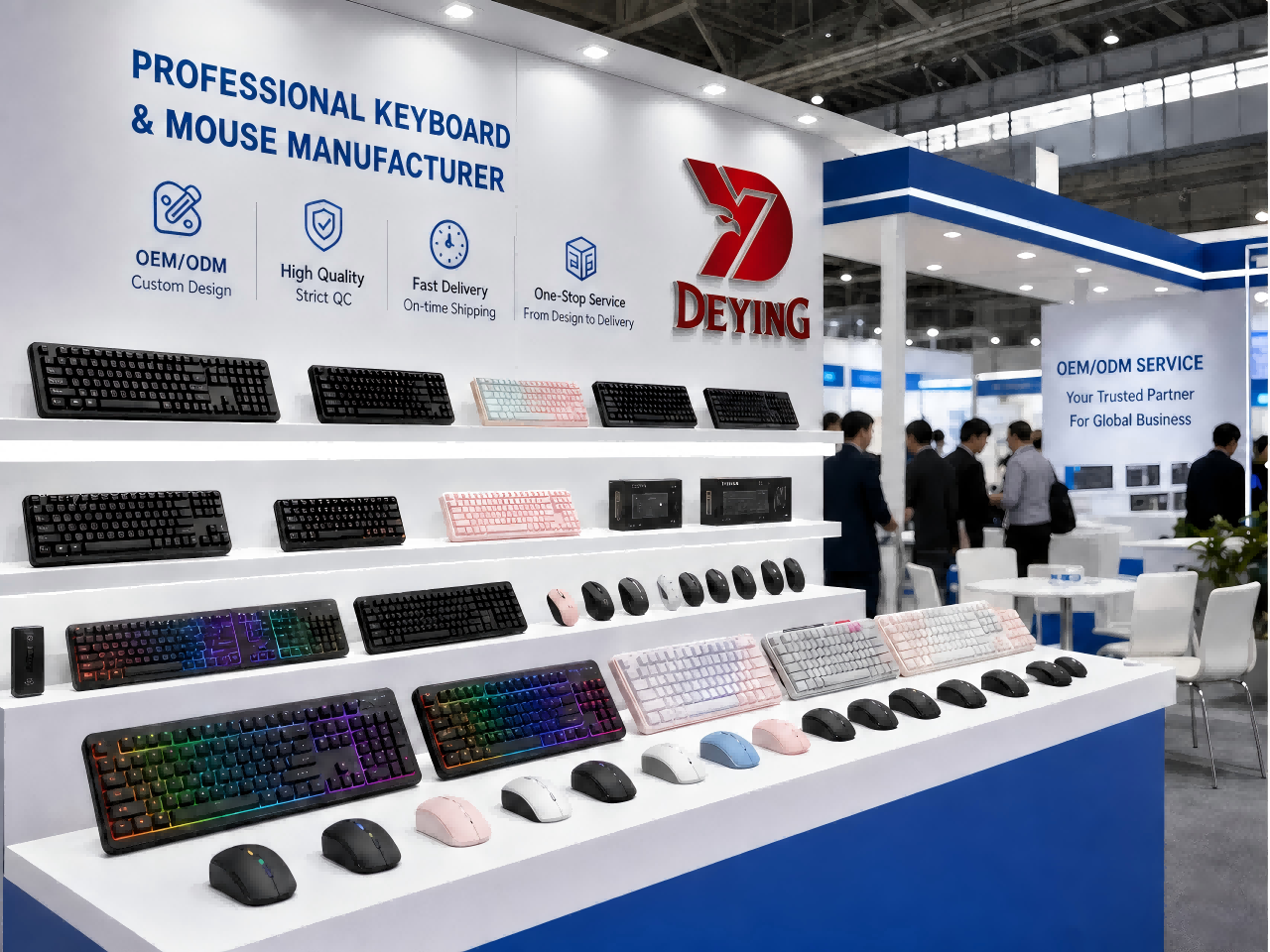
OEM/ODM is our core competency: from product design, logo printing, and packaging to private label production, everything can be customized to customer needs; the R&D team continuously tracks market trends, translating them into competitive, mass-producible products. For many years, we have established stable partnerships with global distributors, retailers, and e-commerce sellers, supporting our clients' growth with rapid response, professional communication, and flexible solutions.
We don't believe "trust" comes from a written statement. It comes from a factory you can walk into, test records you can review, and responsibility clauses that are written into the contract. We welcome you to verify the above six concerns with us: schedule a factory visit, request random inspections from a designated third-party organization, or request a list of certificates for each model.
About Shenzhen Deying: Shenzhen Deying is a professional computer peripheral manufacturer with over 20 years of industry experience. Our main products include wireless keyboards, mechanical keyboards, gaming keyboards, office keyboards, ergonomic keyboards, mice, gaming mice, keyboard and mouse sets, headphones, and other computer accessories. We provide OEM/ODM customization services (product design, logo printing, packaging, private label production), serving the European, North American, South American, Southeast Asian, and Middle Eastern markets. The factory covers an area of 12,000 square meters, has over 500 employees, 10 fully automated production lines, and more than 15 intelligent injection molding machines, with a monthly production capacity exceeding 950,000 sets. It has passed ISO 9001:2008 certification.
Website: dykeyboard.com | Contact: sales4@sz-deying.com