
 Gaming Keyboard
 Gaming Mouse
 Gaming Keyboard And Mouse Combo
 Office Keyboard
 Office Mouse
 Office Keyboard And Mouse Combo








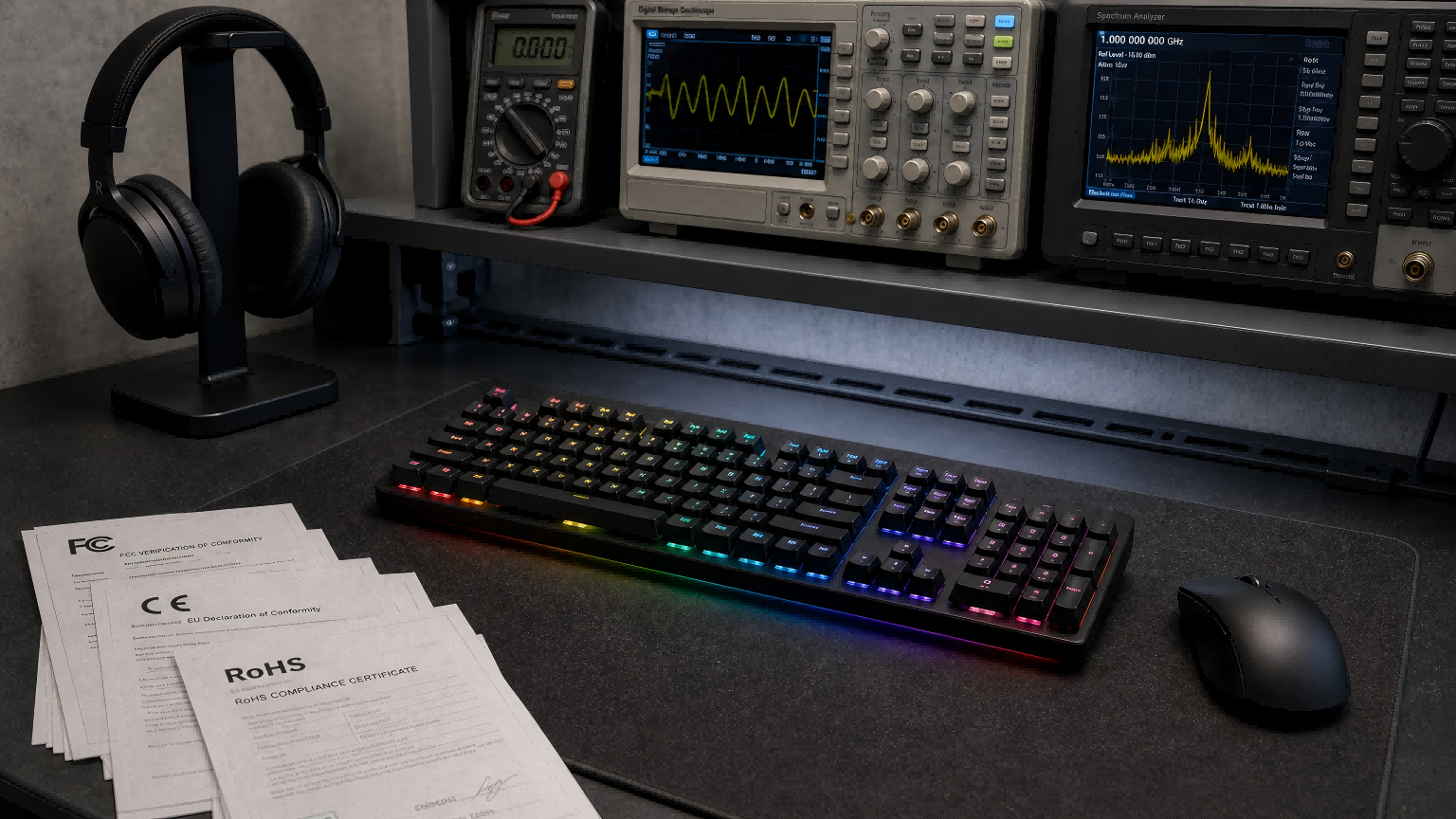

What do CE, FCC, and RoHS stand for? Analysis of certifications required for keyboards, mice, and headphones to enter the European and American markets.
I. CE Marking Explained: Not a Universal Certificate, but a Set of EU Conformity Responsibilities
CE indicates that the manufacturer declares that the product complies with all applicable EU regulations for affixing the CE mark. Manufacturers need to identify the applicable laws for the specific model, complete the corresponding conformity assessment, establish technical documentation, sign the EU Declaration of Conformity (EU DoC), and then correctly affix the CE mark. Whether a notified body is required depends on the specific laws, standards adopted, and conformity assessment path (EU CE Marking Legal Summary). Therefore, purchasers should not only ask "Does it have a CE certificate?" but also verify whether the DoC, technical evidence, and the product itself form a complete correspondence.
The CE path for Keyboards, mice, and headphones depends on their design:
Bluetooth, 2.4 GHz, and other wireless models: Typically assessed according to the Radio Equipment Directive (RED) for basic requirements such as safety, electromagnetic compatibility, and spectrum use; for wireless products that can connect to the internet, process personal data, or have specific functions, the applicability of RED network security, privacy, or anti-fraud requirements should also be determined based on the actual functions.
Purely wired digital models: Typically, the EMC and RoHS directives are the main focus of evaluation. Whether LVD (Low Voltage Directive) applies directly depends on whether the device's rated voltage falls within the legally mandated range; it cannot be determined solely by the product's "electricity consumption."
For wireless models with rechargeable batteries and wired charging support: For headphones, keyboards, and mice listed in the categories, common charging requirements apply conditionally from December 28, 2024, concerning USB Type-C interfaces, charging information, and related sales requirements (Directive (EU) 2022/2380).
Buyers should pay attention to the following when reviewing CE documentation:
Whether the brand, model, and manufacturer on the DoC (Do of Order) match the order and product;
Whether the wireless model lists applicable regulations such as RED (Redundant Restrictions) consistent with the actual function;
Whether the wireless module, frequency band, power, antenna, receiver, and accessories of the test sample are consistent with the mass production configuration;
Whether the documentation covers the final complete device, not just internal modules or similar older models;
Whether supplementary evaluations or updated documentation are required after changes to the PCB, wireless solution, battery, firmware, or model.
It should also be noted that CE does not automatically replace the responsibilities of GPSR (Global Response), WEEE (Wireless Electricity Response), battery, and packaging manufacturers. When actually entering the European market, additional obligations must be determined based on the country of sale, product configuration, and supply chain role.

(Actual photos of the testing laboratory)
II. FCC Explanation: Procedures Differ Between US Wireless and Wired Digital Models
FCC requirements depend on the product's circuitry and radio frequency (RF) functionality, not on the product name such as "keyboard," "Mouse," or "headset." Bluetooth, 2.4 GHz, and other models that actively emit RF energy are generally considered intentionally radiating devices and, with exceptions listed in the regulations, require certification before marketing (47 CFR §15.201). Certification is approved by the FCC or its authorized TCBs based on application materials and test data (47 CFR §2.907).
Wired numeric keyboards, mice, and some USB digital headsets may be considered digital devices, peripherals, or unintentionally radiating devices and may be subject to SDoC or certification according to applicable regulations (47 CFR §15.101). SDoC compliance is ensured by the responsible US party through measurement or an FCC-accepted procedure and should not be marketed as an FCC-approved certification grant (47 CFR §2.906). For purely passive analog headphones, the determination should be based on the actual circuitry; it cannot be assumed that an FCC ID is required solely based on the product name.
When reviewing FCC documentation, buyers should pay attention to the following: First, confirm whether the product is a wireless intentional radiator or a wired digital device/unintentional radiator; Second, verify that the FCC ID, authorization information, and actual brand, model, module, and RF parameters of the wireless model are consistent with the product; Third, ensure that the USB receiver is included in the product evaluation and documentation; Fourth, verify that models undergoing SDoC procedures have a US responsible party and corresponding compliance documentation; Fifth, determine whether the original authorization remains applicable after replacing the wireless chip, module, antenna, or increasing the transmission power.

(Actual photos of the testing laboratory)
III. RoHS Explanation: The Key is Not "Having a Certificate," but Traceable Material Evidence
RoHS is not a voluntary environmental label, nor does it equate to "absolutely non-toxic" products. It restricts ten substances in homogeneous materials of electrical and electronic equipment: cadmium is generally limited to no more than 0.01%, and the other nine substances are generally limited to no more than 0.1%. Specific exemptions and their durations must be verified (RoHS Annex II; Delegated Directive (EU) 2015/863). Third-party test reports, material declarations, and supply chain documents can serve as evidence of compliance, but should not be interpreted as a single "official RoHS certificate" issued uniformly by the EU.
For keyboards, mice, and headphones, RoHS evidence should cover wires, solders, plastics, coatings, circuit boards, and critical components related to the final BOM. Procurement audits should focus on:
Whether the report or declaration corresponds to the actual SKU, BOM, and material version; Whether the sampled materials and components cover the final mass production configuration; Whether applicable exemptions are cited, and whether these exemptions are still valid; Whether a new risk assessment is conducted after changes in materials, suppliers, or surface treatments; Whether RoHS documentation is incorporated into the technical documentation and EU DoC for this model, rather than being stored in isolation.
According to Articles 7 and 13–16 of RoHS, RoHS is related to the technical documentation, EU DoC, and CE compliance chain, but it does not replace RED, EMC, WEEE, battery, or packaging responsibilities.
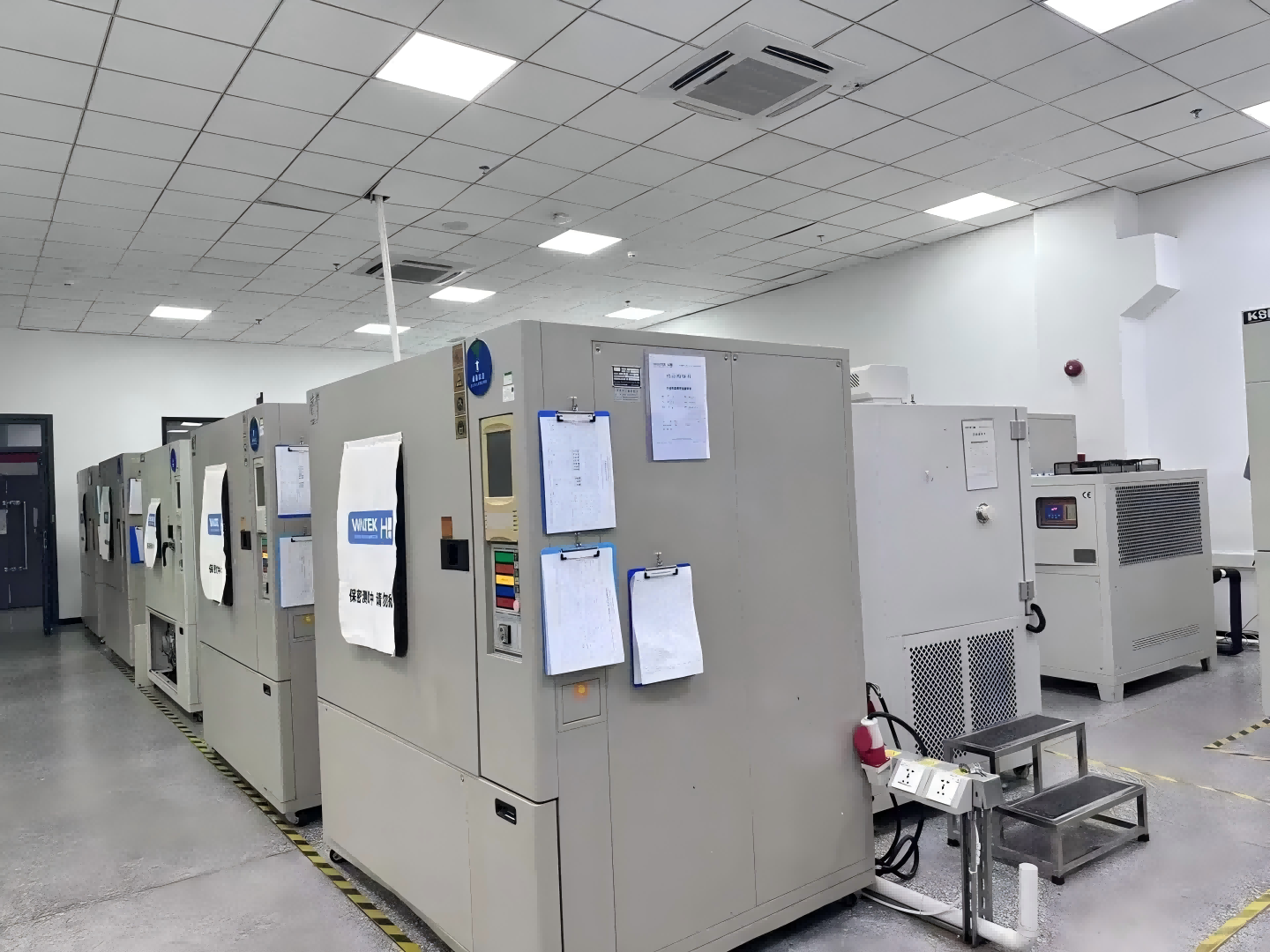
(Actual photos of the testing laboratory)
4. What Compliance Requirements Typically Apply in the European and U.S. Markets?
This table is intended to help buyers understand the general compliance logic. It does not replace a model-specific assessment based on the target country, product configuration, and sales method.
In the European Union, WEEE registration, battery compliance, packaging registration, and Extended Producer Responsibility (EPR) obligations may still need to be confirmed separately in each member state. In the United States, CE and EU RoHS documentation cannot replace the applicable FCC equipment authorization procedure.
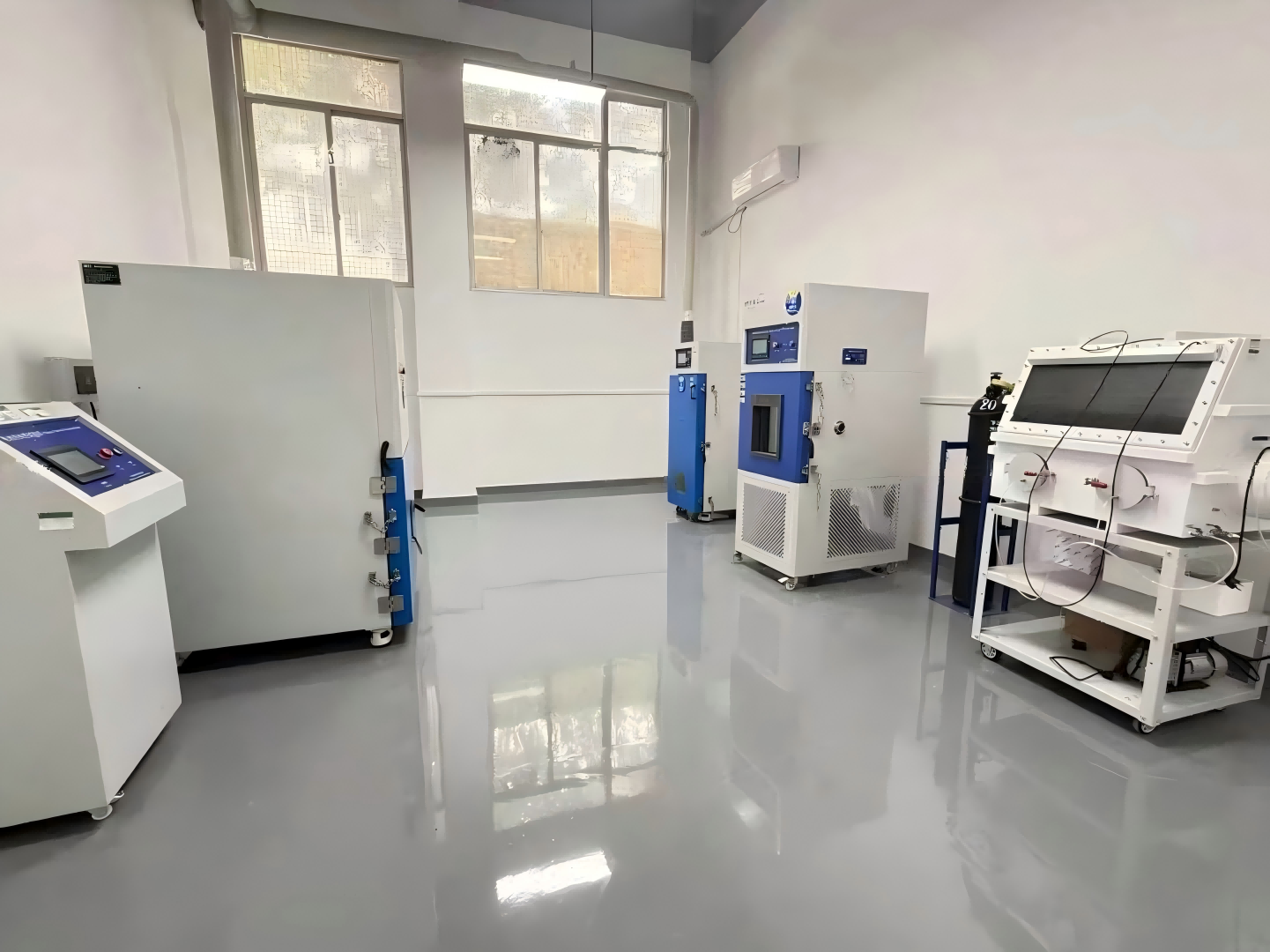
(Actual photos of the testing laboratory)
V. How Deying Addresses Certification Concerns for Customized Products
For OEM/ODM keyboard, mouse, and headset projects, Deying prioritizes compliance requirements from the product definition stage. After the client confirms the target market, we determine the applicable path and assist with sample testing, document preparation, and application based on the final wired/Bluetooth/2.4 GHz solution, PCB, wireless module, antenna, receiver, battery, charging interface, firmware, casing material, and brand/model.
Upon project completion, Deying provides the client with relevant documentation according to the specific customization plan, including:
EU DoC, list of applicable regulations and standards, and CE-related test data for the corresponding model;
FCC Certification authorization information for wireless models, or SDoC data for applicable wired digital models;
RoHS test report, declaration of conformity, and material evidence corresponding to the final SKU/BOM;
Battery, charging interface, labels, instruction manual, and other project-related supporting documents.
Certificates and compliance documents must correspond to the final shipped model and actual internal configuration. If a customer replaces the wireless module, antenna, PCB, materials, battery, or firmware before mass production, Deying will assist in reconfirming whether the original documentation still covers the product, avoiding the risk of "certificates existing but incompatible with the product."
Preparing to customize a keyboard, mouse, or headset? Please provide your target market, product type, connectivity method, battery/charging configuration, brand and model, customization details, and expected quantity in your inquiry. Deying will assess applicable requirements based on the final solution and assist in obtaining and providing CE, FCC, and RoHS compliance documentation for the corresponding model, helping your team reduce uncertainties in procurement audits and market access.