
 Gaming Keyboard
 Gaming Mouse
 Gaming Keyboard And Mouse Combo
 Office Keyboard
 Office Mouse
 Office Keyboard And Mouse Combo



Why Global Brands Choose China Keyboard and Mouse Manufacturers for OEM Solutions
Why Global Brands Choose China Keyboard and Mouse Manufacturers for OEM Solutions
How supply chain depth, in-house tooling, automated capacity and documented quality systems turn a peripheral factory into a long-term OEM partner — and how brands separate a real manufacturer from a trading company.
Key Takeaways
-
China's peripheral supply chain concentrates components, tooling, electronics, assembly and export logistics within one region, which shortens development cycles and reduces engineering risk.
-
Professional factories compete on capability — automation, in-house moulding, documented process control — rather than on unit price alone.
-
OEM and ODM programmes succeed when customization (logo, colour and finish, packaging, product function) is backed by engineering, not relabelling.
-
Quality is decided at incoming inspection and in the reliability lab, long before the outgoing audit.
-
Supplier selection should be based on factory scale, R&D capability, category experience and the after-sales structure that protects the brand after shipment.
1. Overview of the Global Keyboard and Mouse Manufacturing Industry
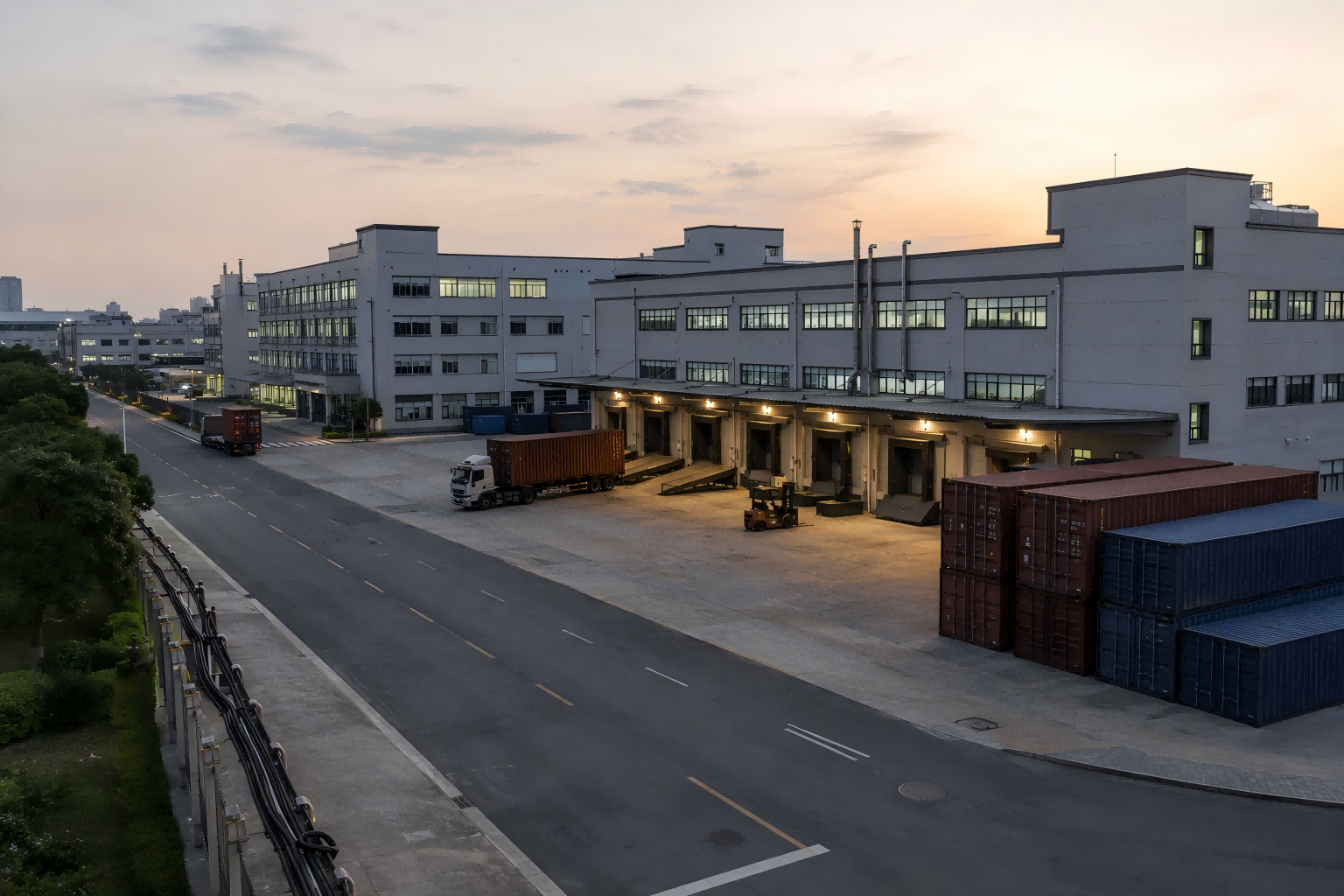
The global peripheral market is served by a small number of manufacturing regions, and China remains its centre of gravity. For brands building a private-label or OEM programme, the practical question is no longer whether China can manufacture the product. It is which type of partner can sustain that product, consistently, over multiple seasons.
China's Supply Chain Advantage
A Keyboard or mouse looks simple from the outside. Inside, one unit can combine moulded housings and keycaps, printed circuit boards, switches or membrane sheets, stabilizers, metal plates, optical sensors, micro switches, encoders, lithium cells, cables, connectors, fasteners, silicone dampers and printed retail packaging. In South China, each of these categories is produced by specialized suppliers within a few hours' drive of the assembly plant.
That density produces three advantages global buyers notice early in a project:
-
Short iteration loops. A material, finish or fitment issue can be resolved with the component supplier in days instead of through weeks of cross-border sampling.
-
Workable tooling economics. Mould shops, surface-finishing and printing suppliers compete locally, so custom tooling can be justified even at moderate volumes.
-
Scalable capacity. When a product succeeds, assembly, testing and packing capacity is added in the same region rather than rebuilt elsewhere.
Complete Industrial Chain Layout
A mature peripheral supply chain is structured as a chain, not a single factory: upstream components and raw materials, then tooling and injection moulding, then electronics and firmware, then assembly and testing, and finally reliability validation, certification and export logistics.
Factories that sit inside this chain — and control the critical links themselves — can commit to lead times with far more confidence than an assembly-only operation that buys every process out. This is where the first supplier distinction appears. A manufacturer owns or directly manages the processes it quotes: tooling and moulding, electronics, assembly, testing. A trading company intermediates them. Both can deliver a sample. Only one can control the process when something goes wrong at scale.
2. Advantages of Professional Keyboard Factories
Automated Production Lines
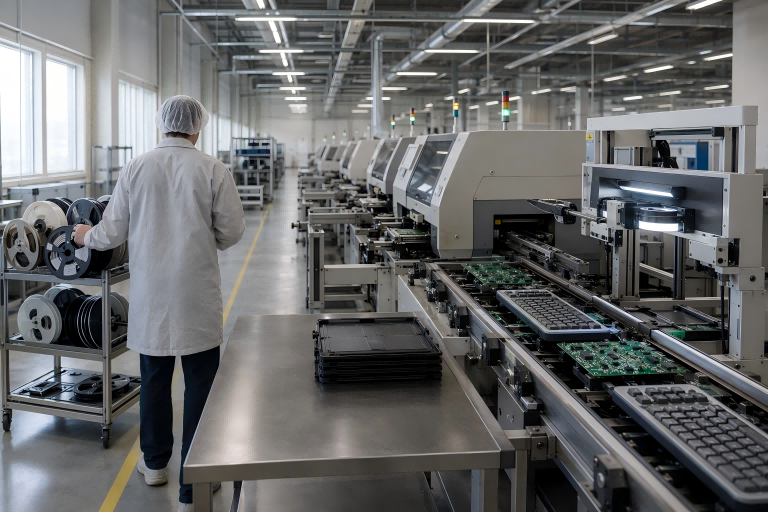
Modern peripheral manufacturing mixes automation with skilled manual work, applied where each adds the most value. On the electronics side, automated solder-paste printing, high-speed placement, reflow soldering and automated optical inspection establish a repeatable base for the board. On the assembly side, automated screw driving, press-fit stations, keycap and switch installation and inline functional test fixtures remove the variation that purely manual assembly introduces.
Automation is also a capacity tool. A factory running 10 fully automated production lines can execute a brand's mass-production order alongside other programmes without displacing either — and can scale output to more than 950,000 sets per month, which matters when a launch date is fixed and retail commitments have already been made.
Mould and Tooling Development Capability
Tooling is where customization becomes physical. Professional factories support mould design review, DFM (design for manufacturing) feedback and T1/T2 sample rounds that tune wall thickness, draft angle, gate location, surface texture and fitment before mass production is released.
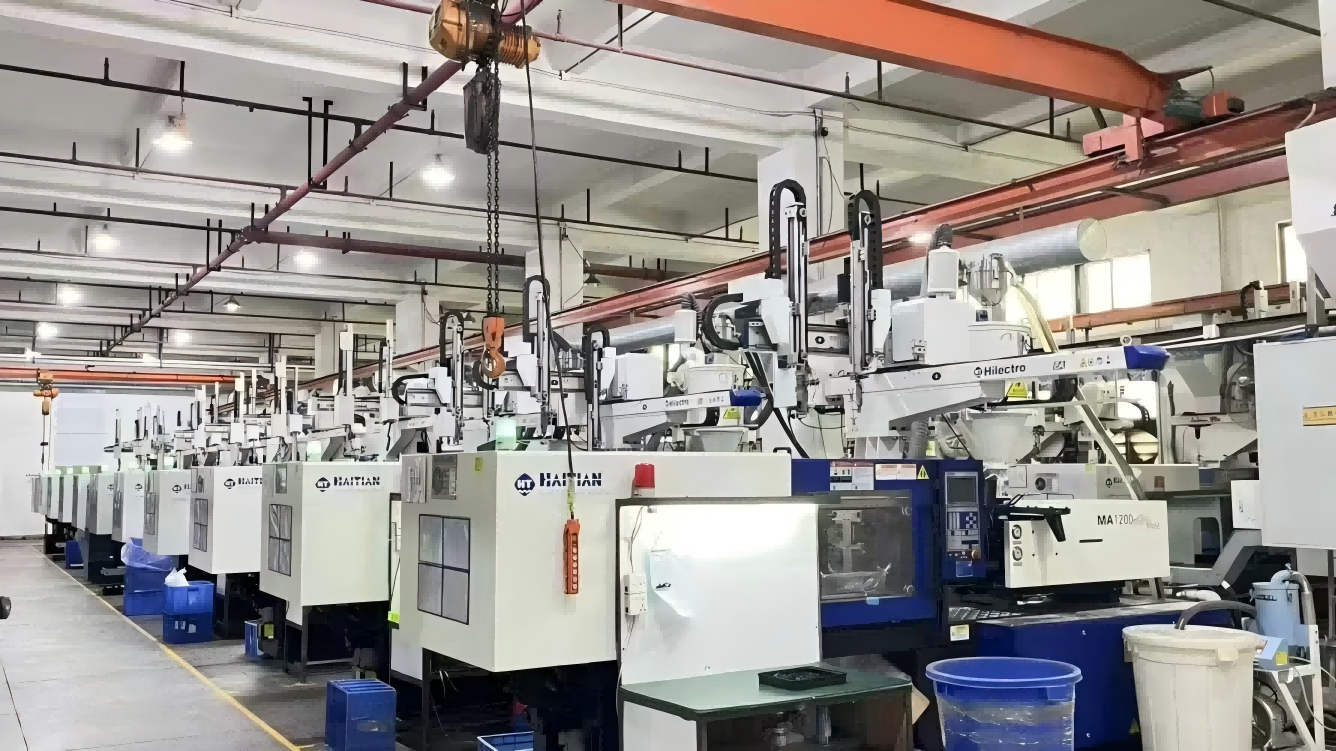
In-house moulding changes the economics and the schedule of customization. With more than 15 intelligent injection moulding machines on site, a manufacturer controls the moulding step directly instead of queueing for an external moulder: mould trials are scheduled internally, colour and texture changes can be tested on the same equipment that will run production, and engineering changes during the product's life cycle stay on a shorter path. Two points deserve a place in every OEM agreement — who owns the tooling, and under what conditions it is transferred.
Documented Quality Control System
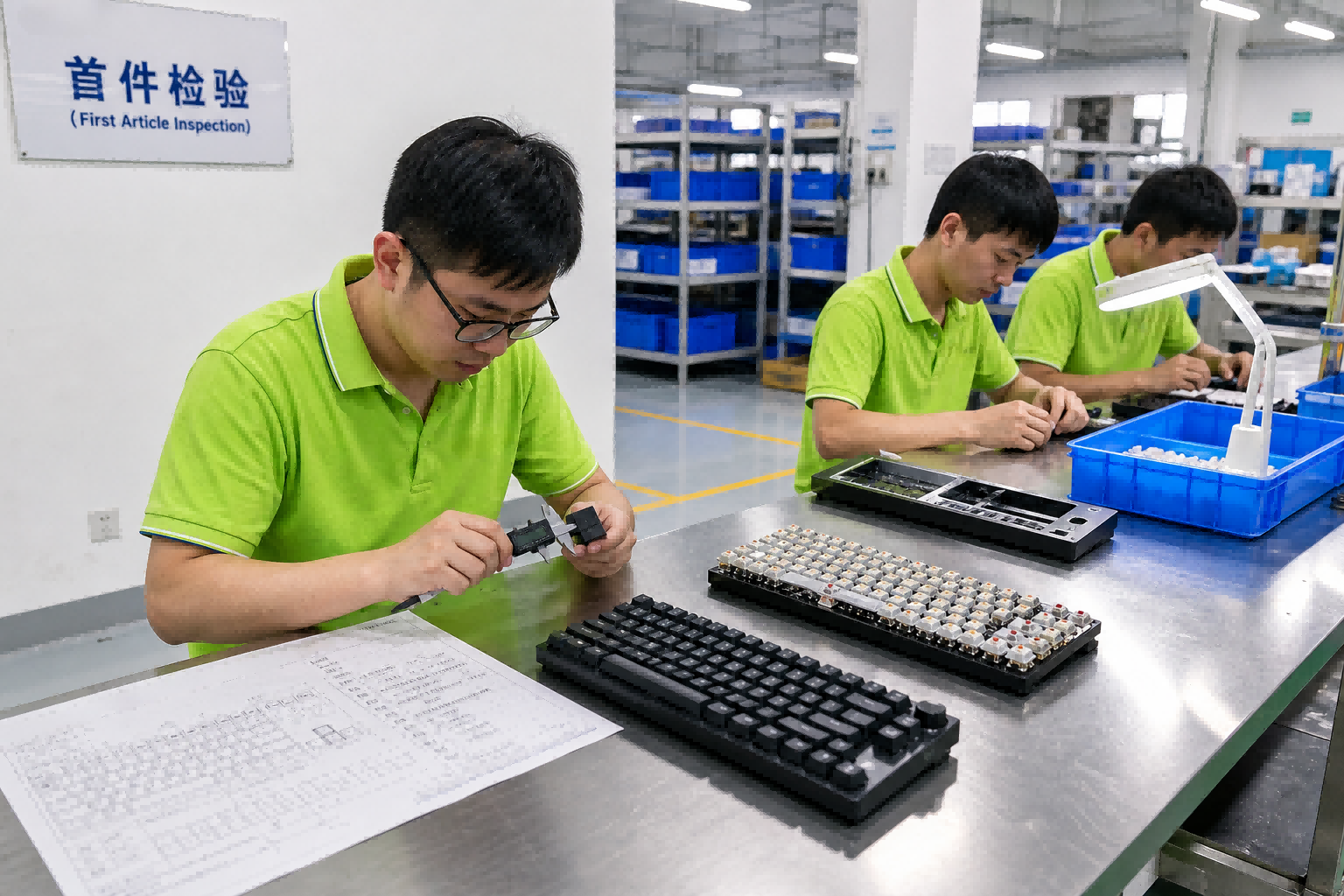
A credible factory operates an inspection chain rather than a single final inspection: incoming quality control on components and materials, in-process checks at defined stations, functional test before packing and outgoing audit sampling before shipment, supported by work instructions, test criteria and lot-level traceability. Working under an ISO 9001 quality management system, this documentation is what allows a brand to investigate a field issue months later and identify the affected batch instead of the entire shipment.
3. OEM and ODM Customization Capabilities
Customization is where brands discover whether a supplier is a manufacturer or a reseller. The four areas below cover most OEM and ODM programmes.
Logo Customization
Branding can be applied at several levels: laser engraving, silk-screen or UV printing on housings and keycaps, a metal nameplate or badge, etching on metal frames, and printed marks on packaging and manuals. The right method depends on the substrate and the durability expected through the product's service life, which is why a manufacturer will recommend a process rather than simply accept an instruction.
Appearance and Colour Customization
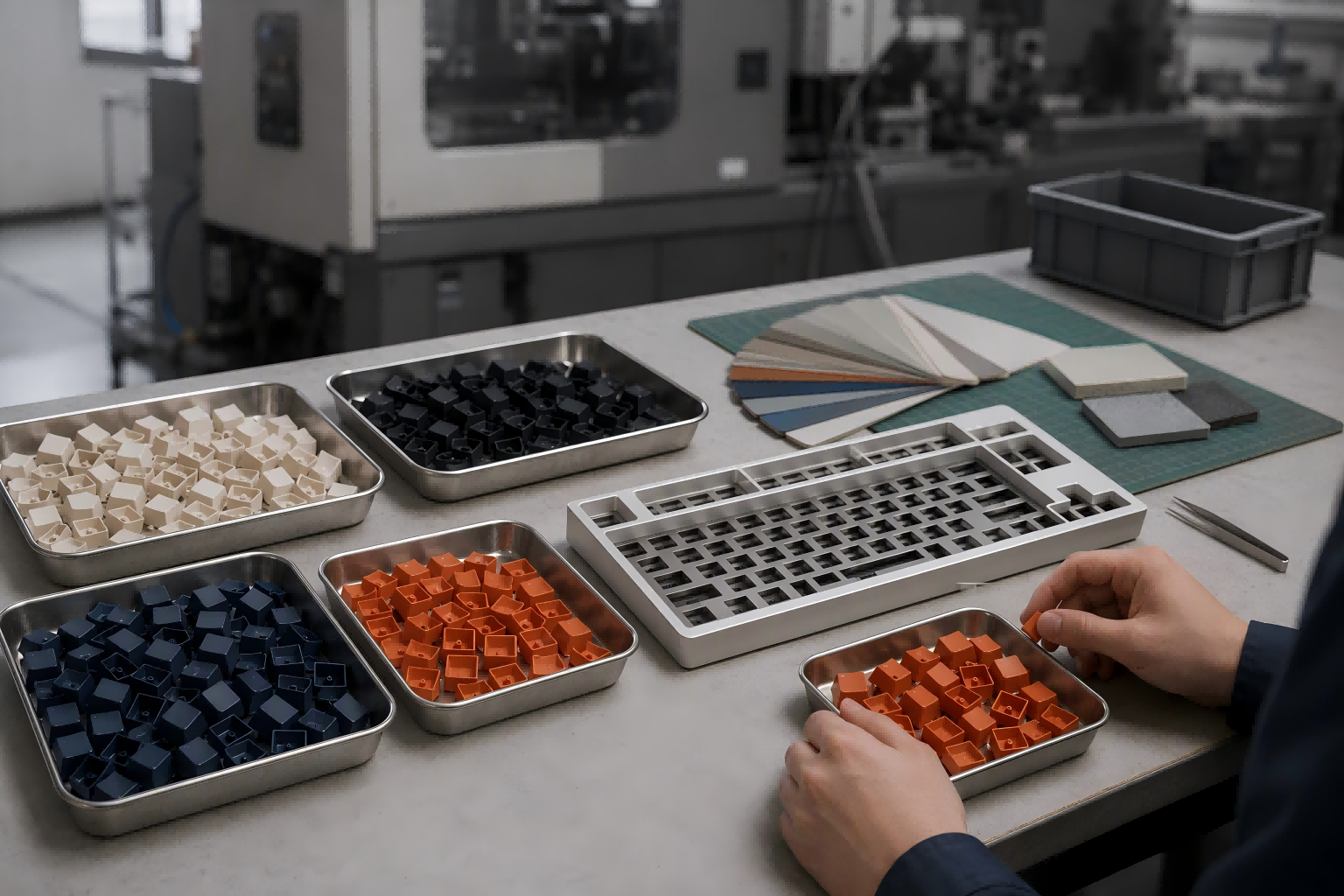
Appearance development covers colour matching against a specified reference, surface finishing (matt, soft-touch, gloss, UV coating, metallic effects), two-shot versus spray-finished keycaps, housing texture and pattern selection, and the internal colour-material-finish documentation that keeps results consistent across batches and repeat orders. Legend design — including double-shot and dye-sublimation options for custom layouts and language sets — belongs to the same workflow. Because moulding is in-house, colour and texture proposals can be validated on real parts before the brand commits to a specification.
Packaging Design
Retail packaging is an engineering discipline in its own right. Professional factories support structural design of the retail box, protective inserts such as die-cut pulp, EPE or blister, printing artwork carrying the required certification marks and multilingual labels, product manuals and warranty cards, and the drop-optimized packing configuration that protects the unit through container transport and last-mile handling. E-commerce-ready protective packaging can be developed in parallel with the product itself — important for brands selling through online channels where a compromised box becomes a return.
Function Development
Function development separates genuine ODM work from cosmetic customization. Typical scope includes wireless connectivity and power management, low-latency 2.4 GHz performance, hot-swap sockets, mount structure and typing-feel tuning, lighting systems and their software, on-board memory and profiles, key-remapping utilities and firmware updates.
In a full ODM programme, the manufacturer's R&D team works from the brand's specification through product design, mechanical and electronics engineering, firmware and validation — with DFM feedback delivered early enough to influence the design instead of merely reacting to it. Deying's engineering team tracks market trends across the keyboard, mouse, combo and headset categories, so product proposals address what buyers are actually asking for rather than repeating last season's specification.
4. Quality Control and International Certifications
Raw Material Inspection
Quality is decided before assembly begins. Incoming inspection verifies component identity and appearance, checks dimensional and electrical characteristics, reviews material declarations for restricted substances, and pre-screens critical parts such as switches and sensors, so a supplier-level defect is caught at the gate rather than inside finished goods.
Product Reliability Testing
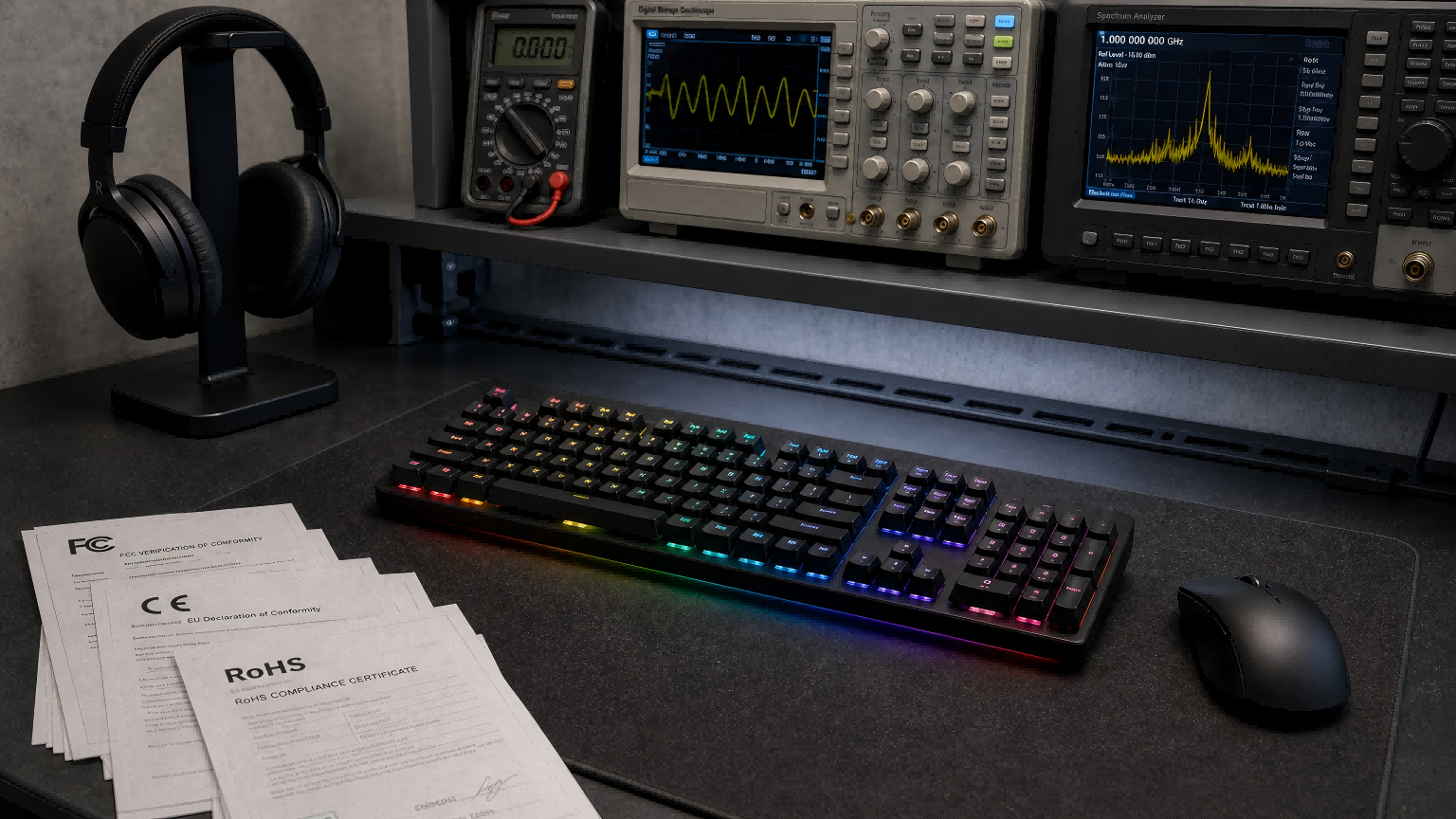
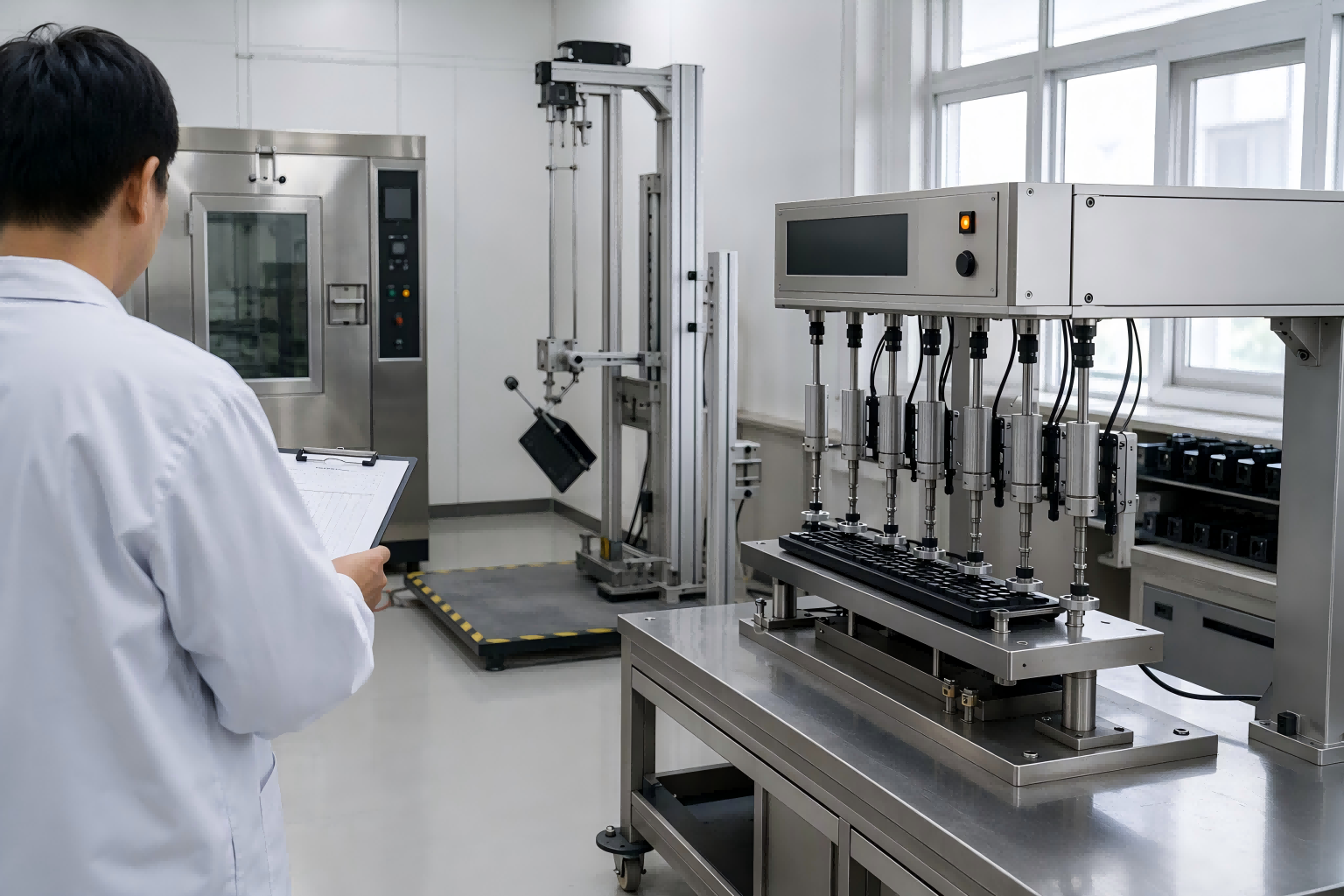
Reliability testing reproduces the stresses a peripheral meets in real use and in transit: key-actuation cycle testing to the brand's specified count, mouse click and scroll durability, connection and charging cycles, cable and connector flex testing, drop and impact tests, temperature and humidity exposure, corrosion screening on metal parts, electrostatic discharge checks, transport vibration simulation and extended burn-in runs. Results are recorded stage by stage, so a brand can review not only the pass/fail outcome but the test conditions behind it.
International Certification Support
Peripherals are sold across many regulatory regimes, so compliance support is a working requirement rather than an afterthought. Depending on the destination market, programmes typically involve electromagnetic compatibility, radio equipment requirements for wireless models, electrical safety where applicable, hazardous-substance restrictions and material declarations, battery transport documentation for lithium-powered products, and packaging, labelling or e-waste obligations. Equally important is the handover: test reports, declarations of conformity and technical files should be delivered to the brand as part of the project, not retained by the supplier.
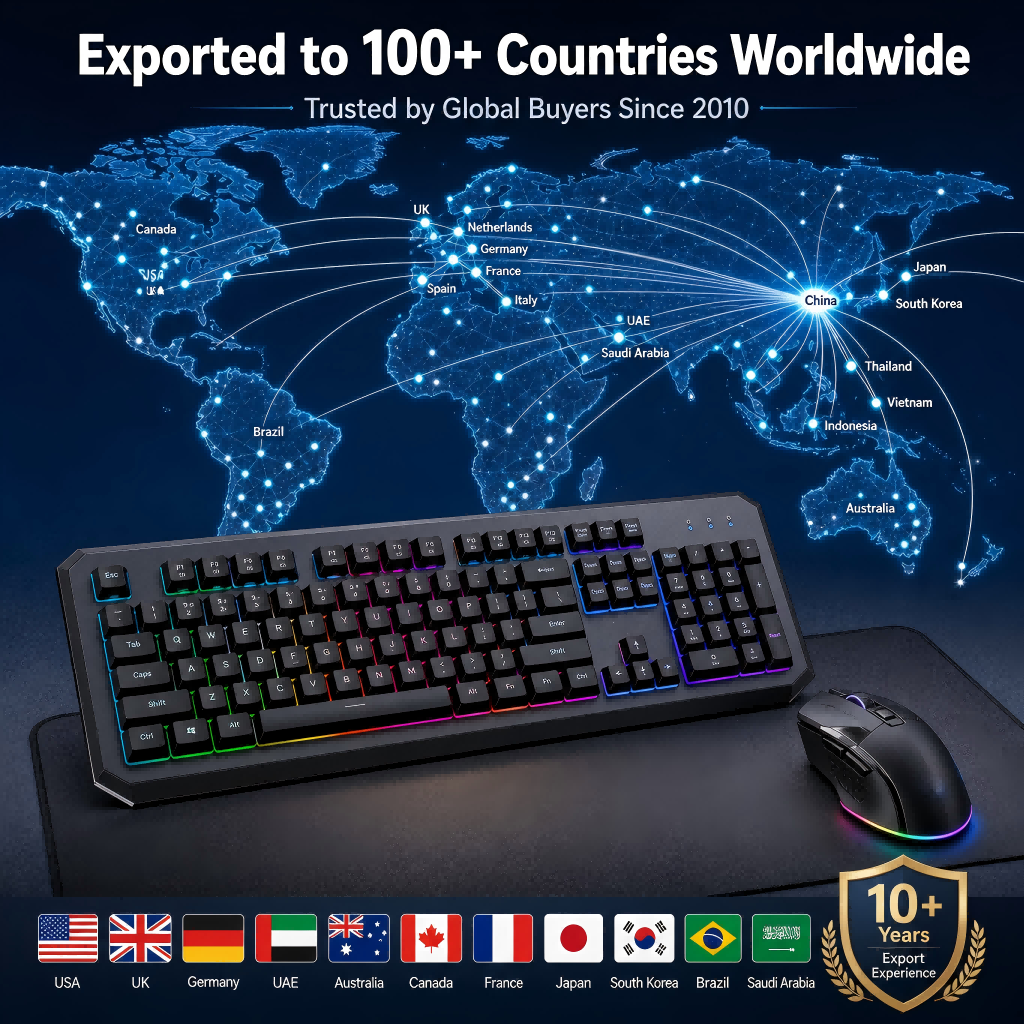
Deying supplies distributors, retailers, e-commerce sellers and private-label programmes across Europe, North America, South America, Southeast Asia and the Middle East, and maintains the certification documentation each of those markets requires before shipment.
5. How to Select a Reliable Keyboard Supplier
Factory Scale
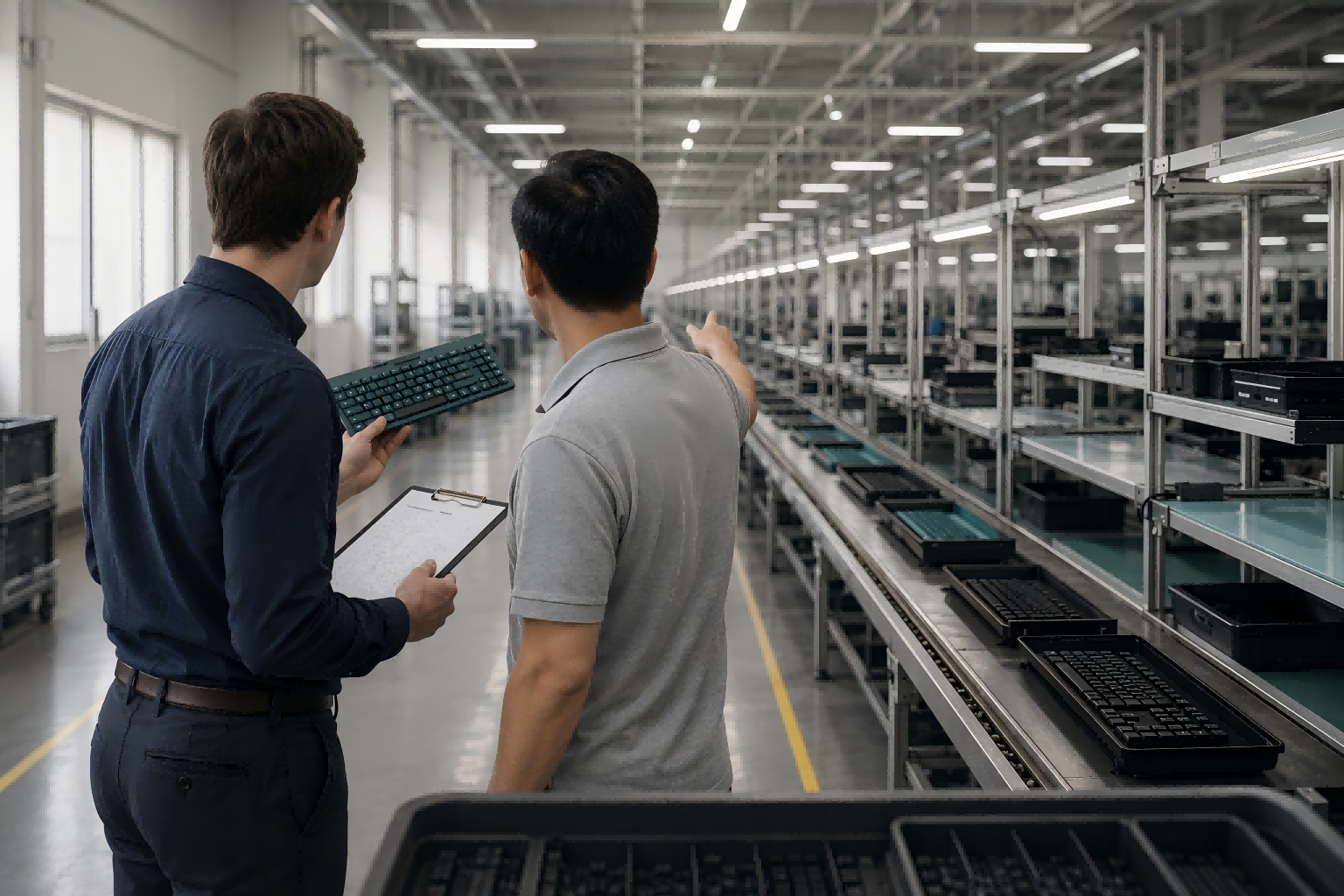
Scale should be read as capability, not as a headline number. Useful questions: which processes are performed in-house, how many lines can be allocated to this programme, what realistic monthly output remains after existing commitments, and how peak-season demand is planned. A manufacturer operating 10 fully automated lines inside a 12,000 m² facility with a 500-strong team can describe its allocation logic precisely — and usually has managed seasonal programmes before.
R&D Team
Ask who will actually work on the project: industrial and mechanical designers, electronics and firmware engineers, test engineers and the project manager who owns the timeline. Then ask about sample turnaround, how engineering change requests are handled during production, and whether firmware and software can be maintained after launch. A manufacturer that develops new products continuously — rather than reproducing existing catalogues — will treat your specification as a design brief.
Production Experience
Experience should be evaluated per category and per market. A supplier with a long history in one product family may still be new to another, and a supplier familiar with one destination market may have no experience with another's compliance profile. Twenty years in computer peripherals, across keyboards, mice, combos and headsets, is relevant only if it overlaps with your segment, volume and customization depth — so ask for anonymized case descriptions under NDA rather than logos.
After-Sales Support
After-sales is a design requirement, not a service gesture. A workable structure covers the warranty terms and their boundaries, spare-part provision and its horizon, how the return and claim process flows and how quickly claims are answered, how firmware issues are corrected once units are in the field, how engineering and material changes are notified in advance, and how end-of-life components are managed so the brand is not forced into an unplanned redesign. Rapid response, professional communication and flexible solutions are the operational habits that decide whether a partnership survives its first difficult shipment.
Conclusion
Global brands choose Chinese keyboard and mouse manufacturers because the supply chain lets a product be designed, tooled, certified and scaled within one region — and because capable factories convert that advantage into predictable output. The deciding factors are rarely the lowest quotation. They are in-house process control, verifiable tooling and engineering ability, documented quality systems, credible compliance support, and an after-sales structure that protects the brand long after the container has shipped.Shenzhen Deying has manufactured computer peripherals for more than 20 years, producing more than 950,000 sets per month from a 12,000 m² facility with 10 fully automated production lines, 15+ intelligent injection moulding machines and an ISO 9001 quality management system. Whether you need a standard model or a fully customized solution, our OEM and ODM team is ready to support your project — and brands evaluating a programme are welcome to request capability documentation, quality records and a factory audit.
Contact us to discuss your OEM or ODM keyboard, mouse, combo or headset project, or to arrange an on-site or virtual factory review.
About Shenzhen Deying
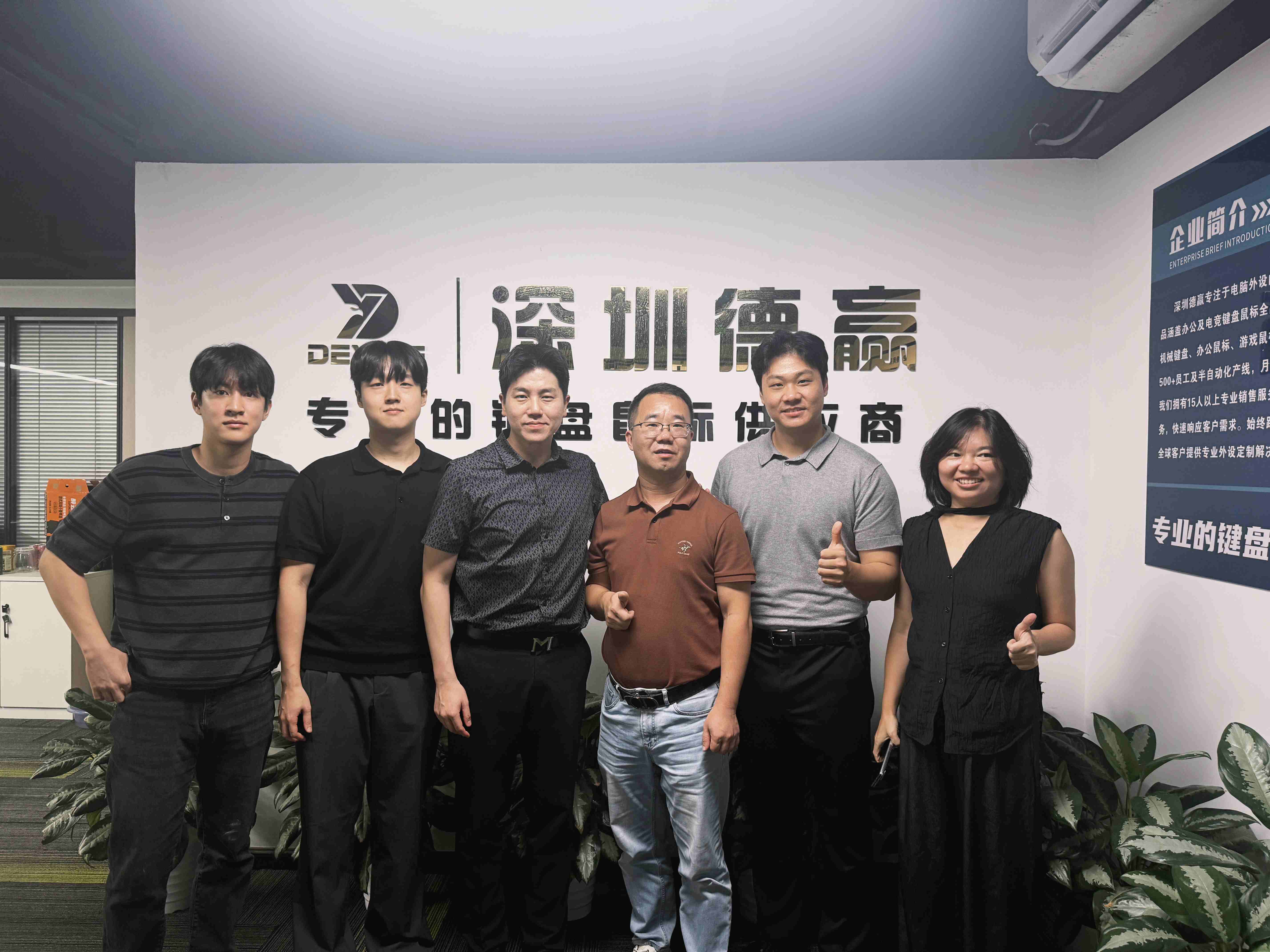
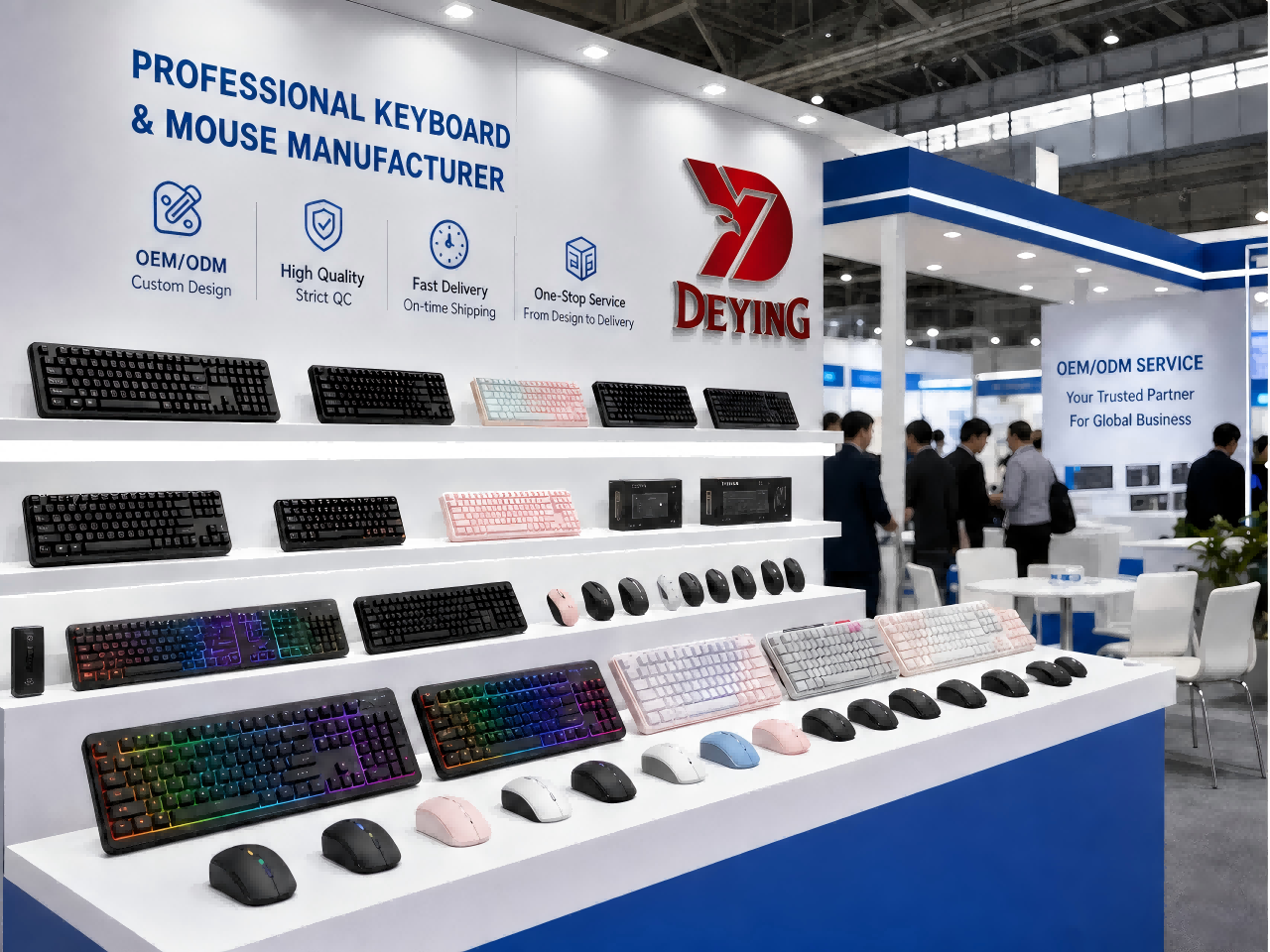
Shenzhen Deying is a professional manufacturer of computer peripherals with more than 20 years of industry experience and a proven OEM and ODM partner for global buyers. Our portfolio includes wireless keyboards, mechanical keyboards, gaming keyboards, office keyboards, ergonomic keyboards, mice, gaming mice, keyboard and mouse combos, headsets and other computer accessories, supplied for office, gaming, home and educational use across Europe, North America, South America, Southeast Asia and the Middle East. Our factory covers 12,000 square metres with more than 500 employees, 10 fully automated production lines and over 15 intelligent injection moulding machines, producing over 950,000 sets per month under an ISO 9001 quality management system. As a manufacturer rather than a trading company, Deying offers OEM and ODM services covering product design, logo printing, packaging and private-label production. Our R&D team tracks market trends to develop competitive, functional products, and our service philosophy is built on rapid response, professional communication, flexible solutions and one-stop procurement support.
FAQ
What is the difference between OEM and ODM keyboard manufacturing?
In OEM production, the brand defines the product and the factory manufactures it to that specification, often using its own tooling and processes. In ODM production, the manufacturer also contributes product development — industrial design, mechanical and electronics engineering, firmware and validation. Many programmes are a blend of the two, so the working model is best agreed in writing rather than assumed.
How long does a custom keyboard project take from concept to shipment?
Duration depends on tooling scope, material and finish choices, electronic complexity, testing requirements and certification targets. Rather than accept a generic timeline, ask the manufacturer for a stage-by-stage schedule after a DFM review, with sample rounds, validation stages and certification steps named separately.
Which certifications should a keyboard and mouse OEM factory support?
It depends on the destination market and on whether the product is wired or wireless. Typical requirements involve electromagnetic compatibility, radio equipment rules for wireless products, hazardous-substance restrictions, battery transport documentation and packaging or waste obligations, plus market-specific labelling. The factory's role is to test, document and hand over compliant evidence; the exact list should be confirmed per market before tooling is released.
What determines the minimum order quantity for a custom keyboard?
MOQ is driven mainly by tooling and component minimums rather than by assembly. A custom housing, a custom keycap set and custom packaging each introduce their own minimum, so a supplier should be able to explain which element sets the floor and how a pilot run can be structured before mass production.
How can a brand verify a factory's quality control system?
Request the inspection plan, sample the records from a recent production lot, review reliability test reports together with their test conditions, and audit the line where your product would be built. Documentation that can be produced for a specific lot is far more informative than a certificate displayed in a meeting room.
Can a brand own the tooling for its custom keyboard?
Tooling ownership is negotiable and should be stated explicitly in the agreement, together with the conditions for transfer, maintenance responsibility during the product's life cycle, and what happens if the relationship ends. Manufacturers that mould in-house can generally support engineering changes faster, which is worth weighing when the commercial terms are compared.